

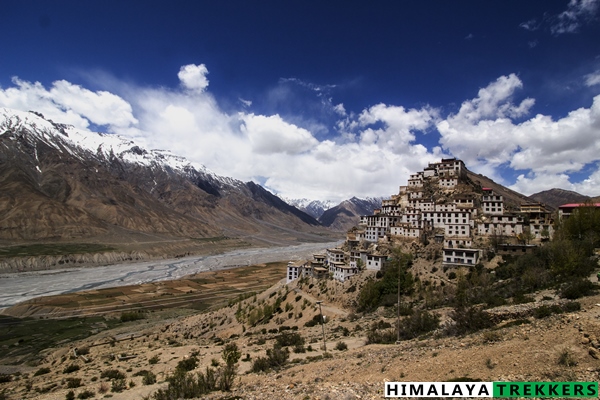
Why the Monasteries Are the Beating Heart of Spiti
At first glance Spiti seems a barren sweep of ochre mountains, snow- and ice-bound high passes, and moonscape riverbeds. However, this is not a blog article about travelling to Spiti but a closer look at its heartbeat, the monasteries of Spiti. Here we try to discover its true pulse: a 1000-year chain of Buddhist monasteries (gompas) that still script daily life in this “Little Tibet” of Himachal Pradesh. From the mural-rich cave temples of Tabo (996 AD) to the cliff-top fortress of Dhankhar and the labyrinth of Key Monastery above the Spiti River, each gompa is a living classroom where lamas chant, masked dancers whirl, and ancient butter-lamp murals glow amber at dawn.
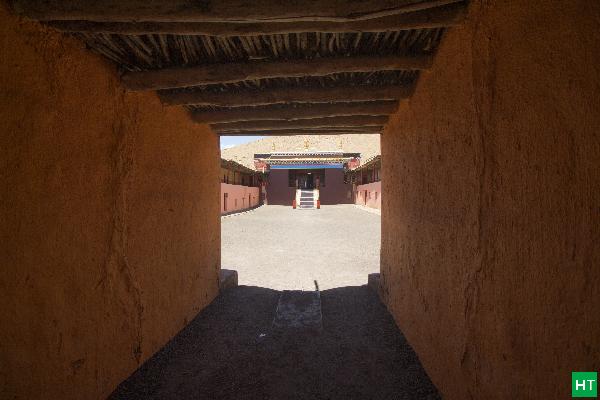
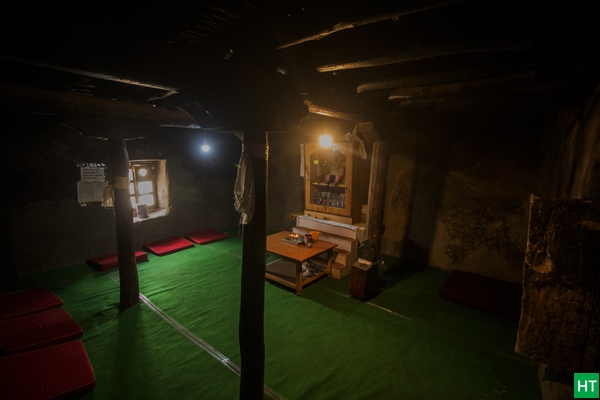
Whether you self-drive or prefer a car sightseeing trip via the legendary Shimla-Kinnaur-Spiti loop or the shorter Manali-Kunzum-Spiti tour, or do it differently like hiking through our Spiti Monastery Homestay Trek, visiting the monasteries offers a window into Himalayan art, history, and resilient desert culture.
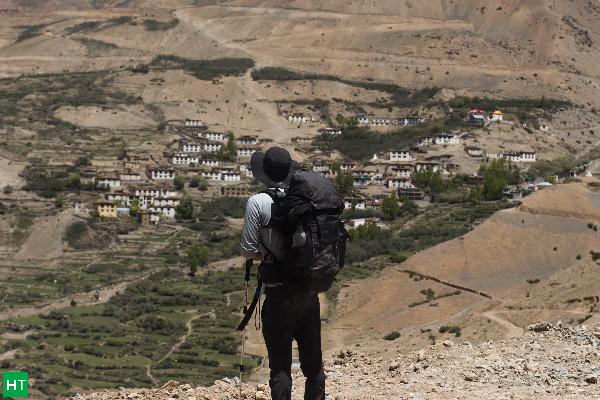
Spiti Monastery Circuit:
You may follow the east-to-west order if you are entering Spiti from the Shimla side. Else, from west to east, a shorter route from Manali fits equally impressively, if not more.
| Monastery | Altitude (m) | Founded | Must-See Highlights | Festival |
|---|---|---|---|---|
| Nako | 3620 | 11th c. | Four chapels with Rinchen Zangpo frescoes; tranquil Nako Lake | Dakhraini (July, local devta); Losar (Feb–Mar) |
| Tabo | 3280 | 996 AD | Clay-plastered meditation caves; Ajanta-style murals; 108 stupas | Chakhar (next in 2027) |
| Dhankhar | 3890 | 12th c. | Cliff-hanging fort monastery; 16th-c. statue of Vairochana | Dhankar Gustor (July) |
| Lhalung | 3658 | 10th c. | Serkhang “Golden Hall”; 51 clay deities; sacred willow & ruined wall | Local Devta puja (variable); Namkan fair (Aug–Sep, regional) |
| Kungri (Pin Valley) | 3470 | 14th c. | Only Nyingma-pa gompa in Spiti; tantric masks & trumpets | Tsheshu Cham (June–July) |
| Komic (Tangyud) | 4587 | 14th–15th c. | One of India’s highest monasteries; fortress-like walls above Komic | Gustor / Cham (Jul–Aug, lunar) |
| Key / Kye | 4166 | 11th c. | “Fortress-monastery” maze of halls; 1 200-year thangkas | Guitor Cham (Jun–Jul) |
| Langza Sakya Monastery | 4420 | 13th c. | 30 m seated Buddha; marine-fossil-strewn meadows | Langza Chham (Sept) |
| Kibber Gompa | 4270 | 15th c. | Small gompa; gateway to Kibber Wildlife Sanctuary | Linka Festival (May) |
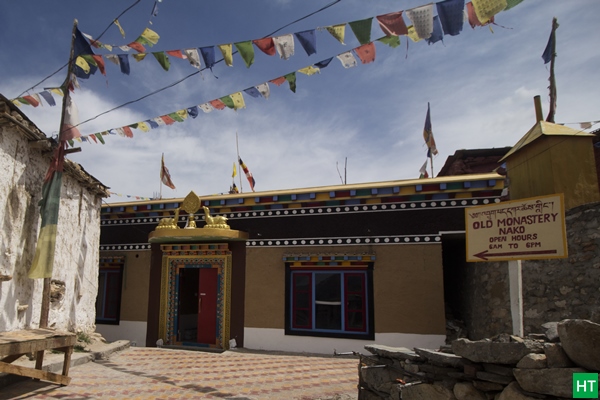
Nako Monastery – “Lake & Lotus Wall”
Perched on a glacial terrace just inside Kinnaur, Nako’s four chapels protect some of the earliest surviving paintings of the Western Himalaya. The main Dukhang’s lotus-bordered wall panels mirror the Kashmiri style that the great translator Rinchen Zangpo introduced from Tibet in the 11th century. A short kora (circumambulation) around Nako Lake at sunrise frames reflections of Reo Purgil peak—perfect starter acclimatisation before you drive deeper into Spiti.
Travel note: Overnight at Nako (3 620 m) to adjust; the next jump to Tabo is gentle.
Festival watch: Dakhraini (July, village‑deity procession): Kinnauri hamlets—including Nako—bring the local devta out in a palanquin, with village dances and offerings. It’s a small, community‑run affair rather than a cham‑dance monastery festival, but if you’re there in mid‑July, you’ll see the deity circuit and feast day.
Tabo Monastery – “Ajanta of the Himalaya”
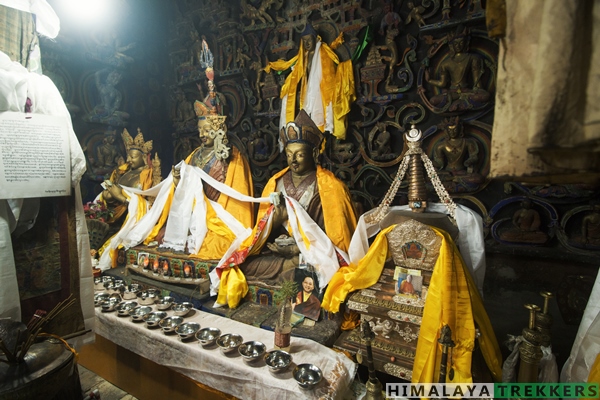
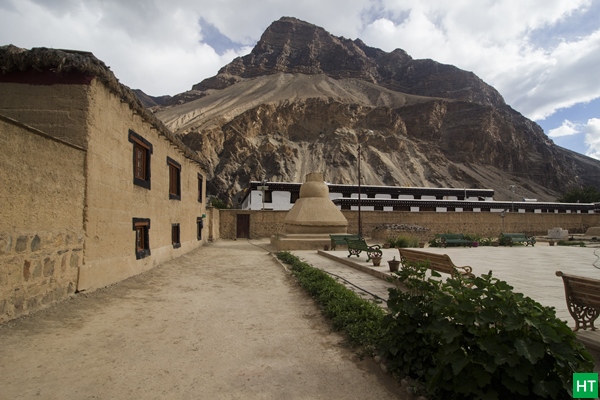
Tabo Gompa predates even the famous Thiksey and Key monasteries. Its mud-brick halls shelter frescoes and stucco Bodhisattvas painted in 996 AD—so revered that the 14th Dalai Lama called Tabo his preferred retreat. Step inside the Tsug la Khang (Assembly Hall) and you’ll find celestial dancers and Jataka tales swirling across a dimly lit ceiling.
Festival watch: Chakhar (the “Great Prayer Ceremony”) happens once every three years—next edition 2027—when monks unfurl a multi-storey thankgka and perform the ‘black-hat’ dance.
Dhankhar Monastery – “Citadel in the Sky”
Balanced on a crumbling finger of yellow rock, Dhankar looks impossible—its 16th-century fort walls plunge 1 000 ft to the Spiti–Pin confluence. Inside, butter-lamp smoke still darkens the ancient Lhakhang where a four-directional Vairochana Buddha radiates calm.
Festival watch: Dhankar Gustor (mid-July). Two days of tantric mask dances climax in the Torma ceremony—destroying a sacrificial cake to banish negativity.
Side hike: Dhankar Lake (4140 m)—a 90-min uphill walk for a mirror-like tarn beneath snow peaks.
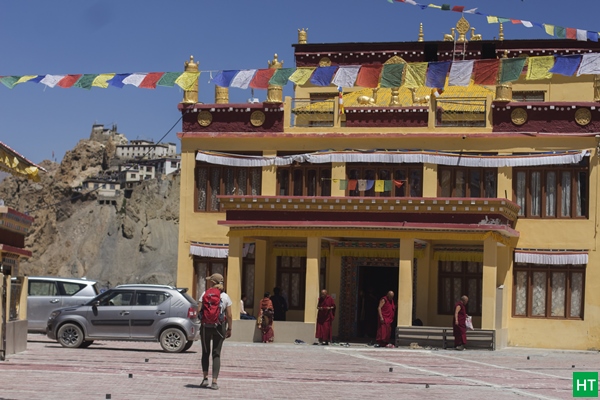
Lhalung Monastery—”Golden “Hall in the Land of Gods”
At 3,658 m in the Lingti valley, Lhalung (lha = deity, lung = country) is claimed to be the “land of the gods,” and its Serkhang—literally the Golden Hall—still shines with golden clay deities inside a 10th-century temple dedicated to Rinchen Zangpo. Only one of the original nine shrines remains, but the complex’s destroyed wall, sacred willow, and 51 wall-mounted figures indicate its past as a choshor (learning and debate) hub, not just a local chapel.
Festival watch: Villagers honour the Lhalung Devta (the valley’s presiding deity tied to the colour‑shifting Tangmar mountain) with community prayers and offerings—dates vary and are fixed by the village gompa.
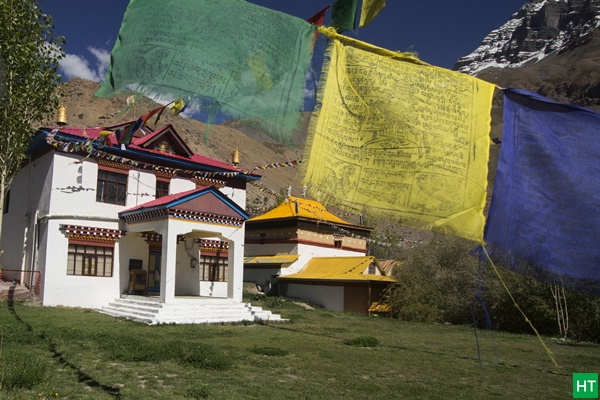
Kungri Monastery – “Tantric Heart of Pin Valley”
Leave the highway, follow the Pin River’s purple scree banks, and you’ll reach Kungri, Spiti’s sole Nyingma-pa stronghold. The sprawling prayer-hall pillars drip with khatas (silk scarves) and tantric paintings of Padmasambhava. Monks here are famed for their black-hat Tsheshu Cham (June)—a hypnotic mask dance accompanied by 10-ft dung-chen horns echoing off marble cliffs.
Festival watch: Cham (masked) & ‘Devil’ dances, plus the traditional sword dance, are performed annually at Kungri—usually in July (dates shift with the lunar calendar, so confirm locally a few weeks ahead). These rites belong to the Nyingmapa tradition; the dramatic sword sequence is led by buzhens from Mud village on the Pin’s right bank.
Tangyud Monastery (Komic) – “India’s Highest Gompa Above the Clouds”
Rested at 4 520 m on the rim of a stony spur in Komic, Tangyud is generally accepted as the highest‑altitude functioning monastery in India—and among the loftiest anywhere accessible by motor road. Its altitude beats Key, Dhankar and Tabo by more than half a kilometre, offering a sweep of the entire Spiti basin and the snow‑domed Chamser peaks.This castle‑like design dates to the 14th‑century Sakya revival, when monasteries doubled as watch‑towers against raids.
Festival watch: Between late July and early August, Tangyud’s lamas perform the Komic Cham, a masked‑dance rite that invokes Padmasambhava’s protection and blesses the barley crop.
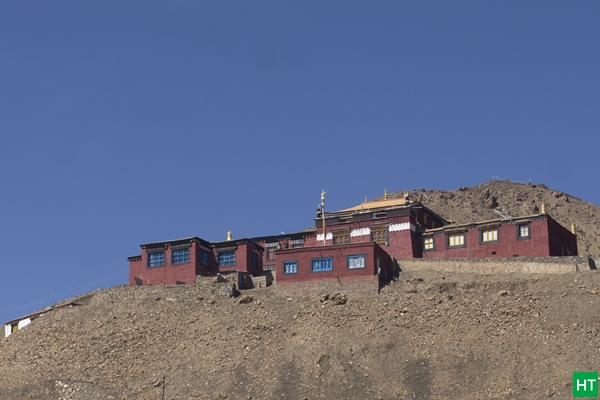
Key (Kye) Monastery – “Fortress of 1 000 Lamps”
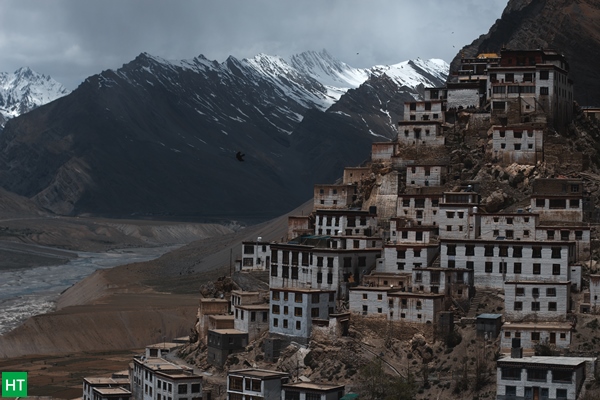
Iconic Key rises like a medieval beehive above the Spiti River at 4 166 m. Over centuries Key endured Mongol raids, 19th-century Sikh assaults and the 1975 earthquake; each rebuild added a layer to its maze. Explore cramped staircases linking 50 monk cells, library, armoury, and a rooftop that frames the entire Spiti horizon.
Festival watch: Guitor Cham (late Jun/early Jul) – the most photogenic masked dance in Spiti; arrive by 8 AM for front-row terrace views.
Langza & Kibber Monasteries– “Where Fossils and Snow Leopards Meet”
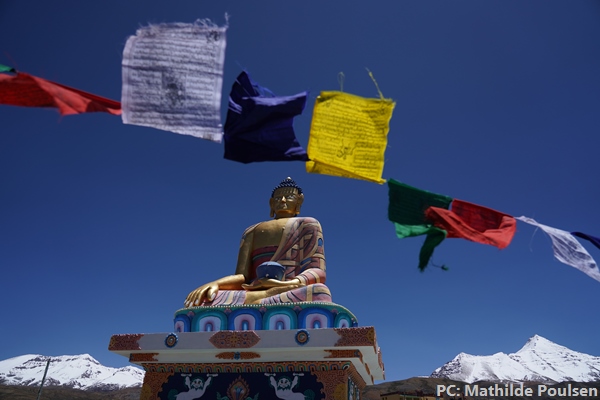
High on treeless plains, Langza is crowned by a 30-m seated Buddha gazing at Chau Chau Khang Nilda peak. After dawn, locals hunt 200-million-year ammonite fossils in shale outcrops—proof Spiti was once an ocean floor. Just west, Kibber is the world’s third-highest permanent village (4 270 m) and winter base for snow-leopard safaris in the Kibber Wildlife Sanctuary.
Best Time to Visit the Monasteries
Because Spiti lies in a rain-shadow, its gompas are technically visitable year-round, but weather, road conditions and festival dates make some months far more comfortable than others.
- Road Access:
The Shimla → Kaza axis (NH-5 / NH-505) is open most of the year, barring short winter closures after heavy snowfall.
The Manali → Kaza route crosses Kunzum La (4 551 m) and opens only after BRO clears snow—typically late May/early June and closes by late September. - Trekking Window: High-pass treks and our Spiti Homestay Trail are practical from June to September when daytime highs reach 15-25 °C and trails are snow-free.
- Winter Visits: From November to March, monasteries remain open but temperatures drop to –20 °C and internal roads ice over; only the Shimla side stays driveable.
| Season | Months | Weather & Road Notes | Trekking Feasibility | Key Monastery Festivals / Highlights |
|---|---|---|---|---|
| Spring | Apr – May | Day 5–15 °C; nights below freezing. Shimla–Kaza road open; Kunzum closed. | Short acclimatisation walks around Tabo & Nako. High passes still snow-bound. | Calm period for mural viewing at Tabo before tourist rush. |
| Summer / Monsoon (rain-shadow) |
Jun – Sep | Dry, sunny 15–25 °C. Kunzum La opens → Manali route operational. Occasional cloudburst on Shimla side. | Main trekking season (Spiti homestays, Pin Valley, high-lake hikes). | Kungri Tsheshu & Key Guitor Cham (Jun–Jul); Dhankar Gustor (mid-Jul). |
| Autumn | Oct | Crisp skies, 0–15 °C. Kunzum may close after first snowfall; check BRO bulletins. | Light day-treks; high passes risk early snow. | Post-harvest Langza Chham (Sept / early Oct). |
| Early Winter | Nov | Day ≤ 5 °C; nights −10 °C. Kunzum closed; only Shimla approach viable. | Trekking not advised; valley roads icy. | Quiet gompa life—good for meditation stays. |
| Deep Winter | Dec – Mar | −10 °C to −25 °C; heavy ice. Limited homestays; road blocks common. | Only short village walks; high passes closed. | Monks in winter retreat; no major public festivals. |
Take-away:
For most travellers—and all trekkers—the June to September window offers the safest mix of open roads, moderate temperatures and vibrant monastery festivals. Spring (April–May) is quieter for culture photographers, while late autumn gives crystal-clear skies but risks early snows at Kunzum. Winter visits are possible via Shimla but require extreme cold tolerance and flexible schedules.
2025 Festival Calendar at a Glance:
| Month / Date (2025) | Festival | Monastery / Venue | Why Go? |
|---|---|---|---|
| 25 May | Linka | Kibber | Village happiness ritual, tree-raising ceremony |
| 10 – 12 Jun | Tsheshu Cham | Kungri & Key | Three-day black-hat dance, giant Tibetan horns |
| 15 – 16 Jul | Dhankar Gustor | Dhankar | Mask dance & sacrificial cake ritual |
| 20 – 22 Aug | Ladarcha Fair | Kaza Bazaar | Former barter fair turned cultural mela |
| 5 Sep | Langza Chham | Langza | Harvest blessing beneath the giant Buddha statue |
How to Reach, Access to the Spiti Monasteries
Classic Road Circuits
- Shimla → Kinnaur → Spiti loop (NH-5/NH-505)
- 3–4 days, 411 km Shimla–Kaza
- Pass Nako, Tabo, Dhankar sequentially
- Best May–Oct (no avalanche risk)
- Manali → Atal Tunnel → Kunzum La → Kaza
- 200 km, 10-hr drive (subject to May–Oct road opening)
- Quickest way to Key, Kibber, Langza
- Ideal for short 5-day monastery circuit
Transport Pro Tip: HP state buses run Shimla–Reckong Peo–Kaza daily (June–Oct). Hire a private 4×4 for flexible monastery detours.
Spiti Homestay Trek – Walk the Monastery Trail
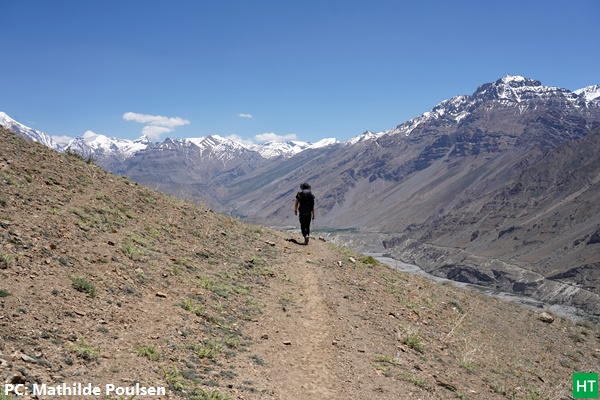
For trekkers, HT’s 6-day Spiti Homestay Trek strings together Key → Kibber → Langza → Komik → Dhankar monasteried on foot, sleeping in family-run stone houses.
Benefits:
- Acclimatisation – climb gradually from 3 600 m to 4 500 m.
- Immersion – milk a dzomo, spin prayer wheels at sunrise, share butter-tea with lamas.
- Lower carbon – skip long jeep detours; your rupees go straight to homestay owners.
Route snapshot: Kaza (3650 m) → Key (4166 m) → Kibber (4270 m) → Langza (4420 m) → Komic (4520 m) → Demul (4380 m) → Lhalung (3720 m) → Dhankar (3750 m)→ Kaza return.
Responsible Travel & Etiquette
- Dress modestly, remove shoes inside chapels.
- No flash photography on murals; ask the lama for phone photos.
- Donate ₹100-₹500 in butter-lamp room to support monk education.
- Plastic is banned—refill water bottles in homestays.
- Altitude: spend a night in Tabo before sleeping above 3 800 m.
Monastery Circuit Itinerary (6–8 Days Road Trip)
| Day | Route | Highlights |
|---|---|---|
| 1 | Shimla → Sarahan | Sarahan Bhimakali Temple stay |
| 2 | Sarahan → Kalpa → Nako | Kinnaur apple terraces, sunset at Nako Lake |
| 3 | Nako → Tabo → Dhankar → Lhalung | Nako murals, Tabo caves, Dhankar cliff gompa |
| 4 | Dhankar → Pin Valley (Kungri) → Kaza | Pin Valley meadow strolls, Kungri cham masks |
| 5 | Kaza → Key → Kibber | Key sunrise chanting, Kibber wildlife walk |
| 6 | Kibber → Langza → Komik → Kaza | Fossil hunt, highest post office at Hikkim |
| 7 | Kaza → Manali route (if open) | Hall of Fame at Atal Tunnel North Portal |
| 8 | Buffer / Dhankar Lake hike | Optional day hike or buffer for road delays |
Final take
Walking into a Spiti gompa means entering a working monastery, not a showpiece. Give each one at least half a day and aim for the morning or evening puja. Sit quietly, listen to the chant, and speak to a monk only if invited. Ask before you photograph, never use flash, and don’t touch murals or masks. Keep your phone on silent, remove caps, don’t step on thresholds, walk koras clockwise, and carry a small cash donation for butter lamps and upkeep. Dress warm (dukhangs stay cold), bring a head‑torch if you plan to see caves, and respect areas marked out of bounds. Festival days (e.g., Cham dances) get crowded—arrive early and follow local instructions. If you can see only one for art history, pick Tabo; for scale, Key; for atmosphere, Dhankar at dusk. Treat these monasteries as living practice spaces, and you’ll leave with more than photographs.
Need help to plan a tour? Feel free to reach us in a way that suits you better below:



Comments