
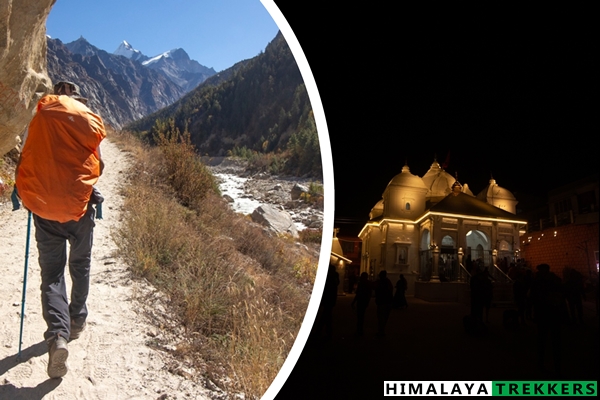
A, a fit Australian couple aged 78 and 67, wanted a comprehensive Garhwal experience that went beyond just trekking. They contacted us for what they called a “mixed tour” – two private treks (Dayara Bugyal and Gangotri-Gaumukh), but also Badrinath temple for spiritual depth, Shankaracharya’s Jyotirmath for historical context, and enough rest days to make 17 days sustainable at their ages. This wasn’t a trekking holiday with temple visits tacked on. It was a deliberately hybrid vacation where adventure, culture, and recovery were equally important.
Over multiple email exchanges, we developed a flexible 17-day private tour from Uttarkashi to Rishikesh that integrated trekking (7 active days), cultural tourism (4 nights at Badrinath, Jyotirmath visit, Gangotri temple proximity), and strategic rest (5 non-trekking days). The planning demonstrated real flexibility – midway through, they shifted dates “to make it more relaxed,” added nights at Badrinath, and requested specific hotel features (quiet locations, river-facing rooms, English-speaking driver). The logistics required coordination across 6 different locations, multi-point luggage storage, and a pay-per-use vehicle model that saved cost on a 17-day tour.
Here’s how this mixed vacation came together, and why combining trekking with temple visits works for travellers who want comprehensive Himalayan experiences rather than single-purpose trips.
Tour Planning Summary: At a Glance
Tour Type: Private mixed vacation (trekking + pilgrimage + sightseeing + rest)
Duration: 17 days (October 1-17)
Trekking Component: Dayara Bugyal (4 days) + Gangotri-Gaumukh (3 days)
Cultural Component: Badrinath temple (4 nights), Shankaracharya’s Jyotirmath, Gangotri temple
Route: Uttarkashi → Raithal → Gangotri → Srinagar → Badrinath → Joshimath → Rudraprayag → Rishikesh
Travellers: 2 people (couple, ages 78 and 67)
What Makes This a Hybrid Vacation
This tour deliberately integrates multiple travel purposes that travellers often think they must choose between. Here’s what the 17 days included:
Trekking Component (7 Active Days):
- Dayara Bugyal trek: October 2-5 (4 days, summit to 3,660m)
- Gangotri-Gaumukh trek: October 8-10 (3 days, up to 4,050m at glacier)
- Camping at high-altitude locations (Goi, Dayara, Barnala, Chirbasa, Bhojbasa)
- Physical challenge maintained (serious altitude, multi-day exertion)
Cultural/Religious Component (4+ Days):
- Badrinath temple: 4 nights (October 12-16) for proper engagement, not just darshan
- Shankaracharya’s Jyotirmath: En route visit to 8th century math
- Gangotri temple: 4 nights split across stay (October 5-8, October 10-11) for proximity and participation
- Sacred geography experience (Gangotri source, Gaumukh glacier, Badrinath Char Dham)
Rest/Recovery Component (5 Non-Trekking Days):
- October 6-7: Full rest days at Gangotri between treks
- October 13-15: Three full days at Badrinath (temple visits but no trekking)
- These aren’t “wasted days” – they’re recovery time that makes 17-day sustained travel possible at ages 67-78
Sightseeing/Transit Component:
- Scenic drives through Garhwal Himalayas (Gangotri-Srinagar 240km, Badrinath-Rishikesh via Joshimath-Rudraprayag)
- Cultural stops: Srinagar town, Rudraprayag confluence, Joshimath historical area
- Overnight stops that double as regional exploration (not just transit accommodation)
Flexibility Component (Demonstrated Throughout Planning):
- Dates shifted mid-planning: “We have shifted our plan two days earlier to make it more relaxed”
- Nights extended: Badrinath increased from 3 to 4 nights, Gangotri restructured
- Hotels customized: Quiet locations requested, river-facing room requested, English-speaking driver arranged
- Costs itemized: Separate quotes for accommodation, transport, treks (transparency and choice)
Client Profile
- Names: Hans (78) and Sylvia (67)
- Origin: Australia (Sydney area)
- Fitness Level: “Fit older couple” – bushwalking over hilly terrain around Sydney, gym for strength and cardiovascular exercise
- Previous Experience: India (Tapovan above Gaumukh years ago), Nepal (Everest region), experienced with altitude
- Acclimatisation Knowledge: Sylvia has almost no problems. Hans knows “climb high, sleep low” strategy, bringing Diamox backup
- Why Hybrid Vacation Suited Them: Experienced enough to handle serious trekking, mature enough to appreciate cultural depth, wise enough to build in rest days for sustainable pacing
Tour Components Breakdown: How 17 Days Were Allocated
Phase 1: Trekking (Dayara Bugyal) – Days 1-5
- Day 1: Drive to Raithal (Oct 1)
- Days 2-4: Active trekking (Goi → Dayara → Barnala → Barsu)
- Day 5: Descent and drive to Gangotri
Phase 2: Rest and Cultural Immersion (Gangotri) – Days 6-7
- Two full rest days at Gangotri
- Physical recovery after Dayara Bugyal
- Gangotri temple visits, aarti participation
- Acclimatisation for upcoming Gaumukh trek
Phase 3: Trekking (Gaumukh) – Days 8-10
- Day 8: Trek to Chirbasa
- Day 9: Bhojbasa + Gaumukh viewpoint
- Day 10: Return to Gangotri
Phase 4: Pilgrimage and Cultural Tourism (Badrinath) – Days 11-16
- Day 11: Drive to Srinagar (breaking long journey)
- Day 12: Drive to Badrinath via Joshimath (Shankaracharya’s math visit)
- Days 13-15: Three full days at Badrinath temple, Mana village, Tapt Kund
- Day 16: Drive from Badrinath to Rudraprayag (another scenic stop)
Phase 5: Return Journey (Conclusion) – Day 17
- Drive from Rudraprayag to Rishikesh (October 17)
- Tour ends
This phased structure shows deliberate integration – trekking isn’t isolated from culture, rest days are strategically placed between exertion, and transit days double as sightseeing opportunities.
Logistics That Make Mixed Vacations Work
Combining trekking with temple visits across 17 days and 6 different locations requires coordination that single-purpose trips don’t face. Here’s what enabled this hybrid model:
1. Multi-Point Luggage Storage
Dayara Bugyal Trek:
Excess luggage left at HT storeroom in Bhatwari (Day 1). On Day 5, car collects luggage from Bhatwari before picking up trekkers at Barsu. They reunite with full luggage upon arrival at Gangotri.
Gangotri-Gaumukh Trek:
Non-trek luggage left at Hotel in Gangotri (Day 8). Collected upon return (Day 10).
Why This Matters: Trekkers don’t carry temple clothes during alpine camping, but also don’t wear trekking gear for 10 days straight. Proper clothes available at each phase.
HT Safety Note: “No valuables/documents/cash/electronics are to be kept in the leave luggage.” Critical items stay with clients always.
2. Pay-Per-Use Vehicle Model
Client Question: “Are we paying for the car for the whole time or just when we’re using it?”
HT Response: “We were planning to keep it only for the days used. If you want to have the car on any other days, that can also be arranged.”
Car Usage Days: October 1 (Uttarkashi-Raithal), October 5 (Barsu-Gangotri), October 11-12 (Gangotri-Badrinath via Srinagar), October 16-17 (Badrinath-Rishikesh via Rudraprayag) = 6 days out of 17
Days Without Car: October 2-4 (Dayara trek), October 6-10 (Gangotri stay + Gaumukh trek), October 13-15 (Badrinath stay) = 11 days
Cost Savings: Paying only for 6 transport days vs full 17-day vehicle hire reduces cost significantly on extended tours. Vehicle (Mahindra Bolero or similar SUV) engaged only when needed, not parked idle.
3. Accommodation Diversity Managed
17 days across 6 locations with 3 accommodation types requires booking coordination:
Mountain Lodges: Raithal (simple, basic)
Camping: 6 nights total (Goi, Dayara Jungle camp, Barnala during Dayara trek; Chirbasa, Bhojbasa during Gaumukh trek)
Hotels: Gangotri (Hotel – 4 nights split before/after Gaumukh), Srinagar (Hotel Aashirwad), Badrinath (Hotel XXXXX Inn – 4 nights), Rudraprayag (The Shangrila Resort)
Client Customization Requests:
- “If the XXXX hotel is unavailable for Gangotri, we’d like a quiet alternative beyond the road head” – preference for peace over proximity to bazaar
- “For the hotel XXXXX Inn, is it possible to get a river facing room?” – Alaknanda river views at Badrinath
- Both requests noted; HT committed to “try our best” (availability dependent)
4. Guide vs Driver Distinction
Client Clarification: “We only need a guide for the treks, not for the car journeys.”
HT Arrangement: “We will arrange a licensed guide (plus a porter) for the treks only and not the car tour parts.”
But they also needed: “Could the car drivers have at least a little English for the purposes of the journeys?”
HT Response: “We will get a driver who will be able to communicate in basic english. However, he will be a driver and not a guide.”
Why This Matters: Trek guide provides safety/route expertise. Driver provides transport and basic communication but not cultural commentary. Cost reflects actual services needed, not bundled unnecessary services.
5. Porter Weight Flexibility
Initial Request: 24kg total – clients carry 15kg, porter carries 9kg
HT Recommendation: “He will be able to carry upto 20 kilos of weight. You may distribute amongst you two and the porter as you wish.”
Why HT Increased Capacity: At ages 67-78, minimising carried weight reduces injury risk on steep sections. The extra 11kg capacity (9→20kg) allows better distribution. Clients can carry less if needed without feeling limited.
Why This Hybrid Model Appeals to Mature Travellers
Physical Challenge Maintained Without Compromise:
Two serious high-altitude treks (Dayara Bugyal to 3,660m, Gaumukh to 4,050m) with multi-day camping. This isn’t “easy trekking for seniors” – it’s genuine mountain adventure that Hans and Sylvia’s fitness level supports.
Cultural Depth That Resonates:
Four nights at Badrinath isn’t rushing through for a photo. It’s enough time to:
- Attend multiple darshan sessions (morning/evening temple timing differences)
- Visit Mana village (last Indian village, Saraswati origin, Vyas Gufa cave)
- Experience Tapt Kund hot springs ritual
- Understand why Badrinath is one of four Char Dham sites
- Observe pilgrim interactions and temple rhythms across days
Shankaracharya’s Jyotirmath visit adds historical context – the 8th century philosopher’s monastery system that shaped modern Hinduism. This level of engagement appeals to intellectually curious mature travellers.
Rest Days as Strategic Feature:
Five non-trekking days (October 6-7 at Gangotri, October 13-15 at Badrinath) aren’t concessions to age – they’re smart planning that makes 17-day sustained travel possible. The alternative would be burnout by day 10.
Temple days aren’t passive either. Badrinath at 3,300m elevation, walking around Mana village, attending multiple darshan sessions – these are active but not trekking-intensive. Perfect recovery activities.
Comprehensive Experience Worth the Investment:
Mature travellers often have limited remaining opportunities for Himalayan travel. A trip that combines Dayara Bugyal’s alpine meadows + Gaumukh glacier proximity + Badrinath spiritual significance + Joshimath historical context delivers more value than three separate single-purpose trips.
Flexibility for Energy Management:
The mid-planning date shift “to make it more relaxed” shows adaptive planning. Extending Badrinath from 3 to 4 nights, adding Rudraprayag overnight stop, building in Gangotri rest days – all responses to recognising what sustainable pacing looks like at their ages.
Age, Fitness, and Medical Considerations
Client Self-Assessment (Honest and Detailed):
“We are a fit older couple. I am 78 and my wife is 67. We have had experience trekking in India and Nepal before, including at altitude. For example, some years ago we trekked and camped at Tapovan (above Gaumukh). We both do bushwalking over hilly terrain around Sydney and we go to the gym for strength and cardiovascular exercise.”
This upfront disclosure is essential. At these ages, operators need evidence of capability, not just enthusiasm.
Supporting Evidence Provided:
- Previous altitude experience: Tapovan (4,463m), Nepal Everest region
- Current training: Hilly bushwalking, gym strength/cardio work
- Acclimatisation knowledge: “I know what to do i.e. climb high, sleep low”
- Medical backup: Bringing Diamox
- Honesty about limitations: Hans has “some difficulty” with acclimatisation (vs Sylvia’s “almost no problems”)
HT Medical Requirements:
“Both of you will be needing medical clearance certificates (will send the format later) so consult your physician also.”
This is mandatory for high-altitude trekking over certain ages. The certificate confirms fitness for altitude and physical exertion, protecting both client safety and operator liability. It’s not bureaucracy – it’s responsible tourism.
Final 17-Day Itinerary
Day 1 (October 1): Drive from Uttarkashi to Raithal (2,200m, 40km, 2 hours). Leave excess luggage at HT storeroom in Bhatwari (11km before Raithal). Overnight in simple mountain lodge.
Day 2 (October 2): Trek to Goi (2,850m / 9,350 ft) – 4km, 4 hours. Camp.
Day 3 (October 3): Trek to Dayara Jungle camp (3,340m / 10,955 ft) – 4km, 3 hours. Explore meadows in afternoon. Camp.
Day 4 (October 4): Explore Dayara Bugyal – summit to Bakriya top (3,660m / 12,005 ft), descent to Barnala (2,900m / 9,510 ft) – 12km, 7-8 hours. Camp.
Day 5 (October 5): Trek to Barsu (2,250m / 7,380 ft) – 5km, 3 hours. Car picks up luggage from Bhatwari, then picks up trekkers from Barsu. Drive to Gangotri (80km, 4 hours). Hotel.
Days 6-7 (October 6-7): REST DAYS at Gangotri. Physical recovery after Dayara Bugyal. Gangotri temple visits. Acclimatisation for Gaumukh trek ahead. Hotel.
Day 8 (October 8): Trek from Gangotri to Chirbasa (3,580m / 11,750 ft) – 9km, 4-5 hours. Camp. Non-trek luggage left at Hotel.
Day 9 (October 9): Trek to Bhojbasa (3,780m / 12,400 ft) – 5km, 2-3 hours. Camp. Post-lunch hike towards Gaumukh (4,050m / 13,285 ft) – return trip 3 hours.
Day 10 (October 10): Trek back to Gangotri – 14km, 4-5 hours. Collect luggage from hotel. Hotel.
Day 11 (October 11): Drive from Gangotri to Srinagar (240km, 9-10 hours). Breaking the long journey to Badrinath. Hotel.
Day 12 (October 12): Drive from Srinagar to Badrinath (180km, 6-7 hours). En route visit to Adi Shankaracharya’s Jyotirmath temple in Joshimath. Hotel XXXXX Inn or similar near Badrinath temple.
Days 13-15 (October 13-15): Three full days at BADRINATH. Temple darshan multiple times, Mana village visit, Tapt Kund hot springs, exploration of sacred geography. Hotel XXXXX Inn or similar.
Day 16 (October 16): Checkout early from Badrinath. Drive to Joshimath (45km, 2 hours) for any additional visits if needed. Continue to Rudraprayag (115km, 4-5 hours). The Shangrila Resort or similar.
Day 17 (October 17): Drive from Rudraprayag to Rishikesh (135km, approximately 5 hours). End of tour. Note: Hans wanted to “reach there say by 5 pm” but HT advised “7 or 8 pm depending on road conditions” – realistic expectation management.
Cost Structure and Booking Process
Client Request for Itemized Breakdown:
“Could you please give us separate quotes for: (a) accommodation (total) with hotels/guesthouses used (b) transport (total) with the Mahindra Bolero (are we paying for the car for the whole time or just when we’re using it?) (c) the treks (total)”
This shows financial literacy and desire for transparency. Itemization helps clients understand cost drivers and make informed upgrade decisions.
HT Response Structure:
- Trek Fee: [Separate line item]
- Transportation Fee: [Separate line item]
- Accommodation Fee: [Separate line item with hotels listed]
(Specific amounts masked in blog for evergreen content, but structure demonstrates transparency approach)
Payment Terms Explained:
- 50 percent deposit to confirm booking
- Balance payment two weeks prior to trek start
- International Payment Recommendation: Use Wise (formerly TransferWise) or Revolut instead of traditional wire transfer – “much faster and charges/commissions are much lower”
Documents Required:
- Indemnity form (hard copy original)
- Passport and visa (scanned copy sent, original carried, photocopies for each)
- Passport photos (scanned copy sent, 4 physical copies each carried)
- Data sheet (Excel format provided by HT)
- Medical certificate (scanned copy sent, original carried during trip)
- Gangotri and Badrinath registration via government portal (client responsibility)
Decision-Making Lessons: What Makes Hybrid Vacations Work
1. Hybrid Vacations Suit Travellers Who Want Comprehensive Experiences:
Mature, experienced travellers often don’t want to choose between adventure OR culture. They want both. A hybrid model delivers Dayara Bugyal’s alpine meadows + Gaumukh glacier + Badrinath spiritual depth + Joshimath history in one trip, not three separate journeys.
2. Rest Days Are Features, Not Compromises:
Five non-trekking days out of 17 (29 percent of tour) isn’t “wasting time” – it’s sustainable pacing that prevents burnout. Temple visits, cultural exploration, and physical recovery are valuable activities, not downtime.
3. Multi-Point Luggage Storage Enables Comfort:
Bhatwari and Gangotri storage lets trekkers carry only trek gear during camping phases, but have proper clothes for temple visits and hotel stays. No living out of one duffel for 17 days, no carrying unnecessary weight during alpine treks.
4. Pay-Per-Use Vehicle Model Optimizes Extended Tour Costs:
On 17-day tours with stationary periods (trek days, temple stays), paying only for 6 transport days vs 17 full days significantly reduces costs while maintaining mobility when needed. This model works for hybrid vacations with multiple location types.
5. Flexibility Requires Early Communication and Adaptive Planning:
Hans shifted dates “two days earlier to make it more relaxed” and extended Badrinath from 3 to 4 nights mid-planning. This flexibility was possible because changes came during planning phase, not pre-departure. It also required operator willing to revise rather than insist on fixed packages.
6. Cultural Integration Enriches Mountain Experience:
Four nights at Badrinath provides depth that one-night pilgrimage circuit stops miss. Understanding Shankaracharya’s philosophy, experiencing Gangotri temple proximity to glacier source, observing pilgrim rhythms – this context makes the mountains more than just scenery.
7. Medical Clearance and Age Assessment Protect Everyone:
For trekkers over 60-65 attempting high altitude, medical certificates aren’t bureaucratic obstacles – they’re safety documentation ensuring clients are medically cleared for planned exertion. This protects client health and operator liability.
Related Tours and Topics
- Dayara Bugyal Trek – Complete route information
- Tapovan Trek (Gangotri-Gaumukh) – Glacier proximity trekking
- Hybrid Vacation Planning in the Himalayas
- Char Dham Yatra with Trekking Combinations
- Trekking in Your 60s and 70s: Medical and Fitness Requirements
- Garhwal Cultural Tourism Beyond Trekking
- Multi-Week Himalayan Tours: Logistics and Planning
Below follows the complete email consultation showing how this 17-day hybrid vacation was developed.
Email Consultation: Planning a Mixed Vacation in Garhwal
We are an Australian couple wanting to do two private treks in the Gangotri area in October this year, we do not want to join a group.
Treks: Dayara Bugyal (4 days trek) and Gangotri – Gaumukh – Gangotri. (3 days trek).
We will also need some other services as mentioned below:
Accommodation: At Raithal, Gangotri (4 nights), One night between Gangotri and Badrinath, Badrinath (3 nights).
Transportation: For the entire tour starting from Uttarkashi and ending at Rishikesh.
Personal Porter: Between us, we will have about 24 kg for the treks. We will carry 15 kg between us and we will need a porter to carry 9 kg. We will also have luggage not coming on the trek and we assume there will be secure facilities in Raithal and Gangotri for those?
We are a fit older couple. I am 78 and my wife is 67. We have had experience trekking in India and Nepal before, including at altitude. For example, some years ago we trekked and camped at Tapovan (above Gaumukh). We both do bushwalking over hilly terrain around Sydney and we go to the gym for strength and cardiovascular exercise.
Please let me know if there’s any other information you need.
Greetings of the day from India. Thank you for reaching out to us, HIMALAYA TREKKERS (HT). We would be glad to organise a private and customised tour for you two. It’s good to see that you have had good trekking experience and are fit.
We will arrange the services as per your requirement mentioned above:
Trek part: Dayara Bugyal and Gangotri Gaumukh treks. Private and customised treks for the 2 of you.
Accommodation: Depending on availability, we will book the Hotel/Lodge as requested.
- Raithal – 1 night, simple mountain lodge.
- Gangotri – 4 nights
- 1 night halt between Gangotri and Badrinath.
- Badrinath – 3 nights
Let us now come to the luggage factor. We will arrange a porter for both Dayara Bugyal trek as well as Gangotri – Gaumukh trek. He will be able to carry upto 20 kilos of weight. You may distribute amongst you two and the porter as you wish.
For the leave luggage part, it will be done like this:
- Dayara Bugyal Trek part: You leave your excess luggage at our storeroom at Bhatwari (on the way before Raithal). On the last day of the trek, the car will pick up the luggage from Bhatwari store and then pick you up from Barsu before proceeding to Gangotri.
- Gangotri Gaumukh trek: You may leave your excess luggage at the hotel in Gangotri.
Note: No valuables/documents/cash/electronics are to be kept in the leave luggage.
We have some additional questions for you:
- Have either of you had any acclimatization problems?
- What type of car would you like for your journey? Commercial small cars/hatchbacks are not recommended on this route but only Suv/Bolero/Xylo or more premium Toyota Innova.
- Anything else would you like to include/exclude in the package?
I will send you the package based upon your inputs. Please feel free to share anything that comes to your mind.
Thanks for your prompt and informative reply, which interests us very much. I will answer your questions first:
Sylvia has almost no problems with acclimatisation. I am more experienced but have some difficulty but I know what to do i.e. climb high, sleep low and this has stood me in good stead in Nepal (Everest region, etc) and India (eg Tapovan). We will also be bringing Diamox, just in case.
I agree about the car suggestion, especially for the Gangotri part down to Uttarkashi. The Mahindra Bolero looks basic but a tough vehicle.
I can’t think of anything else to include or exclude.
We also have some questions:
1. For the drive from Gangotri to Badrinath over two days, what about stopping in Srinagar (240 km) or even Rudraprayag (270 km) so as to have less to travel the second day (we want to visit Shankaracharya’s Temple in Joshimath on the way).
2. We would like to leave Badrinath early for Rishikesh so as to reach there say by 5 pm, allowing for road holdups. What would you suggest?
3. I believe we have to go through some registration process for Gangotri and Badrinath?
We’ve noted your comments about porter and left luggage and agree.
Good to see that you are knowledgeable about acclimatisation. Both of you will be needing medical clearance certificates (will send the format later) so consult your physician also.
We will keep Mahindra Bolero/similar car for your tour. Let me answer to your questions below:
1. For the drive from Gangotri to Badrinath over two days, what about stopping in Srinagar (240 km) or even Rudraprayag (270 km) so as to have less to travel the second day (we want to visit Shankaracharya’s Temple in Joshimath on the way).
This can be done. We will make the stop on day 11 at The Shangrila Resort approximately 270 kms, 10-11 hours, just before Rudraprayag.
On the next day, day 12, you can start early from Rudraprayag, travel to Adi Shankaracharya’s Jyotirmath in Joshimath and then drive to Badrinath approximately 160 kms, 7 to 8 hours including temple visit.
2. We would like to leave Badrinath early for Rishikesh so as to reach there say by 5 pm, allowing for road holdups. What would you suggest?
Yes, this would be beneficial. Start early, have your breakfast and lunch on the way at roadside eateries and reach Rishikesh. Still I would not keep 5 pm as a fixed target. It can easily become 7 or 8 pm depending on road conditions. So do not keep any other plans for that day.
3. I believe we have to go through some registration process for Gangotri and Badrinath?
Yes, you would need to register for Gangotri and Badrinath. Here is the link: https://registrationandtouristcare.uk.gov.in/signin.php
Give us a couple of days to send you the complete package. Please feel free to share anything that comes to your mind.
We have shifted our plan two days earlier to make it more relaxed. Here is our amended itinerary and comments:
October
1 – Uttarkashi – Raithal (Car)
2-5 – Dayara Bugyal trek, return Raithal then drive to Gangotri for overnight (car)
6,7 – Gangotri stay continue
8-10 – Trek Gangotri – Bhojbasa – (Gaumukh – Bhojbasa) – Gangotri
11,12 – Drive (car) Gangotri – Srinagar – Badrinath
13-15 – Badrinath
16,17 – Drive (car) Badrinath – Rudraprayag – Rishikesh, enroute visit Shankaracharya’s Temple in JoshimathServices requested
Accommodation:
Raithal 1/2 Oct (1 night)
Gangotri 5/8 Oct (3 nights) + 10/11 Oct (1 night)
Srinagar 11/12 Oct (1 night)
Badrinath 12/16 Oct (4 nights)
Rudraprayag 16/17 Oct (1 night)Transport (car):
Uttarkashi – Raithal 1 Oct
Raithal – Gangotri 5 Oct
Gangotri – Srinagar – Badrinath 11,12 Oct
Badrinath – Rudraprayag – Rishikesh 16,17 OctTreks: Dayara Bugyal 2-5 Oct and Gangotri/Gaumukh 8-10 Oct
Note: We only need a guide for the treks, not for the car journeys.
Quotes: Could you please give us separate quotes for:
(a) accommodation (total) with hotels/guesthouses used
(b) transport (total) with the Mahindra Bolero (are we paying for the car for the whole time or just when we’re using it?)
(c) the treks (total)Looking forward to your email reply
We appreciate your inputs and have thus modified your itinerary. Here is your modified itinerary:
[Complete 17-day itinerary as detailed in summary section above]
Here are the links to our webpages for both the treks for more detailed information, pictures etc:
Dayara Bugyal Trek
Tapovan Trek (Gangotri-Gaumukh)
The accommodation will be arranged on double/twin sharing.
We will arrange a licensed guide (plus a porter) for the treks only and not the car tour parts.
Now for the car (Mahindra Bolero/similar), we were planning to keep it only for the days used (highlighted on the itinerary). If you want to have the car on any other days, that can also be arranged. Let us know and we will proceed accordingly.
We will send separate quotes for Accommodation, Transport and the Trek part after we get your inputs.
Thanks for your very informative email. We confirm the itinerary and the points about the car, guide, porter and so on.
The hotels seem adequate at the very least.
We just have three requests:
1. If desired hotel is unavailable for Gangotri, we’d like a quiet alternative beyond the road head.
2. Could the car drivers have at least a little English for the purposes of the journeys?
3. For the hotel XXXX Inn, is it possible to get a river facing room?
Best regards
That’s great. And about your 3 requests, we will try our best for nos 1 and 3. As for the driver, we will get a driver who will be able to communicate in basic english. However, he will be a driver and not a guide.
We appreciate your patience. Here are your quotes:
- Trek Fee: XXXXXX
- Transportation Fee: XXXXX
- Accommodation Fee: XXXXX
Thank you for your very comprehensive information and quotes and we accept them. We are very much looking forward to travelling with your company.
Apart from the medical clearances, are there any other forms we need to fill?
When will you need a deposit and how much?
We would need you to send us the following documents:
- Indemnity form: Hard copy (original) with you.
- Passport & visa: Send us a scanned copy of both and carry original during the travel with a couple of photocopies for each document.
- Passport size photos: Send us a scanned copy of both and carry 4 copies for each of you
- Data Sheet: Attached is the excel format. Send the softcopy to us via email.
- Medical Certificate: Send us a scanned copy of both and carry original during the trip.
Also please do not forget to do the registration for Gangotri and Badrinath. Here is the link: https://registrationandtouristcare.uk.gov.in/signin.php
We would need approximately 50 percent of the TOUR FEE in the following account to ensure your participation. Your booking will abide by these Terms & Conditions and Booking and Cancellation policy.
If you have a non-Indian bank account, then we strongly recommend using a money transfer app like Wise (Erstwhile TransferWise) or Revolut as an easy way to send the money. These are much faster and charges/commissions are much lower than the traditional and often pretty complicated wire transfer from an International bank to an Indian bank account.
Mention your Name in the “Transaction Remarks/Narration” field while initiating transaction. Email us once the payment is made mentioning the “Transaction ID/Reference No/IMPS No” and the amount paid. We will send you an email confirmation along with other necessary details. The balance payment is to be made Two weeks prior through WISE/Revolut.
Post-Tour Outcome and Google Review
Tour Status: This 17-day mixed vacation was successfully completed in October. The comprehensive planning documented above – from flexible itinerary development to multi-point logistics coordination – demonstrates HT’s approach to hybrid vacation planning that balances trekking adventure with cultural tourism for mature, experienced travellers seeking comprehensive Himalayan experiences.
Sylvia Florin
We organised some trekking and travel with Himalaya Trekkers in October. We were delighted with the service, both in the planning phase and on the ground. We really appreciated the prompt, thoughtful and detailed information from Mr. Aritra in the planning phase; it helped clarify what we wanted to do and how best to do it. We felt equally well looked after by Mr. Aritra when we were trekking and travelling, as well as by Ramesh and his team on the ground. The cook, Bipin, was excellent. A change of plan was needed because of unseasonal snowfall and this too, was handled professionally and with care. We highly recommend this company.
Feel free to connect to us to design your treks and tours in Garhwal Himalayas.



Comments