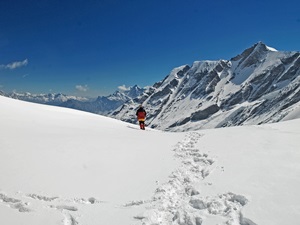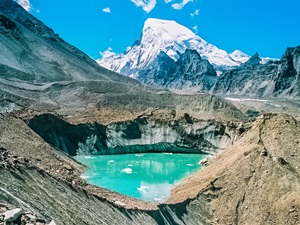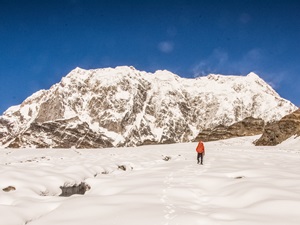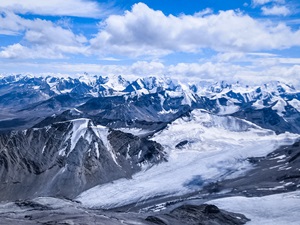

Trekking Expeditions sit beyond the standard Difficult grade. These are routes that involve sustained travel above 5,000 m (16,400 ft), often on glaciated terrain, with sections that require self-arrest awareness, moraine navigation, and the ability to manage extended days in thin air. They are not mountaineering expeditions in the technical climbing sense – but they are not standard treks either.
Setting up logistics is another major challenge and demanding task on these routes.
We mention a route as a Trekking Expedition when it meets the following thresholds:
- Trekking Duration: 10 days or more of actual walking.
- Trail Length: Typically 90 km and above.
- Trekking time per day: Averaging 7 to 10 hours, with multiple long summit or crossing days.
- Physicality: 9 or above. Sustained output over consecutive demanding days is required.
- Maximum altitude: Above 5,000 m (16,400 ft). Several routes cross passes above 5,500 m (18,045 ft).
- Altitude gain per day: Up to 1,500 m (4,920 ft) on key crossing days.
- Trail type: Glaciated sections, crevassed moraine, high-altitude snowfields, and unmarked terrain are all common. Route-finding experience or a technically confident guide is essential.
Who these treks are for:
You should have completed at least two Difficult grade Himalayan treks prior to attempting any expedition-grade route. General fitness is not enough – acclimatisation history, cold-weather camping experience, and mental resilience for multi-week remote travel all matter here.
Our website currently has five expedition routes (although we do customise many more): Kalindi Khal Trek (Gangotri), Auden’s Col Trek (Gangotri to Kedarnath), Panpatia Col Trek (Gangotri area), Kang Yatse 2 Peak (Ladakh), and Yunam Peak Expedition (Lahaul). Each has its own technical character – see individual trek pages for full route details.