

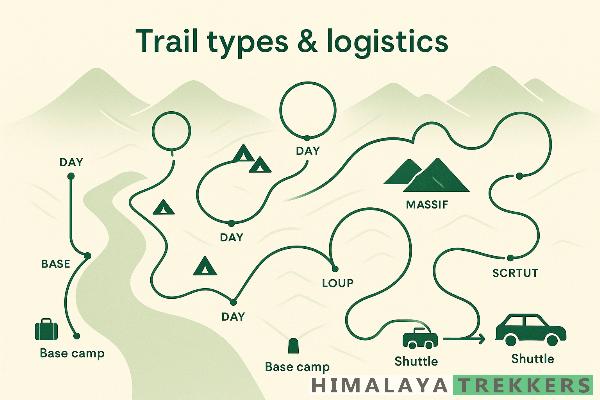
In this article, we unpack a little-discussed topic—how trail shape affects logistics and itineraries, and how to plan for it.
Why trail shape matters
Below is a practical guide to the trail shapes you’ll encounter — what each means, and where it matters that you plan accordingly. Our job at HT is to shape the route you actually walk: less pointless retracing, better-timed big days, and friction-free logistics that let the mountains do the talking.
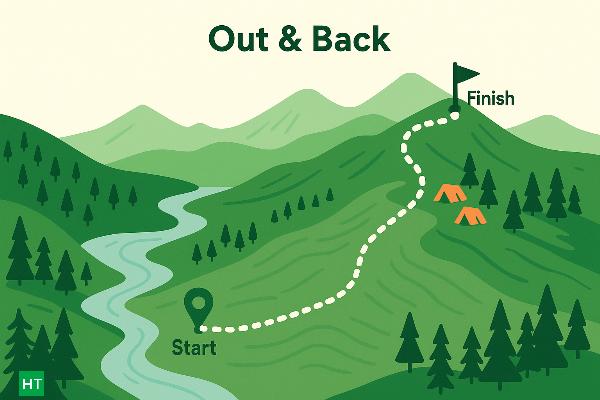
Out & back (valley format)
What it means
Walk up a valley to a high point (viewpoint, lake, glacier snout) and return the same way. Simple to run; easy to shorten if needed. Use the repeat day as a built-in weather hedge for key views.
HT trail examples
Har Ki Dun (homestay or camping format) | Tapovan (Gaumukh–Tapovan) | Satopanth Tal
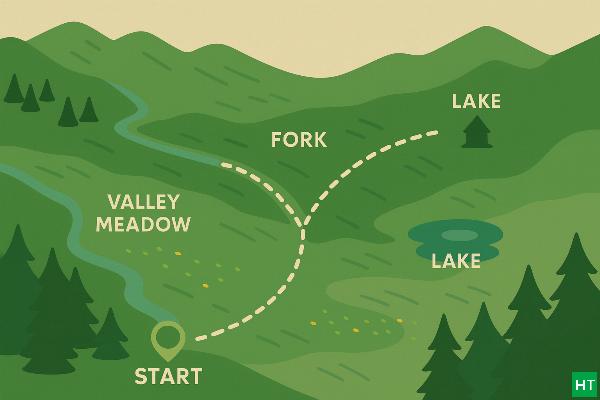
Fork (Y-junction day choices)
What it means
A shared approach to a base with two distinct day-hike arms. You do each arm on separate days and sleep back at the same base. Classic pattern: Ghangaria fork — Valley of Flowers one day, Hemkund Sahib the next. Another variant is the inverted Y, on trail similar to “⅄” , where the distance between start and end points are usually nearby and connected by a short drive.
Example
Valley of Flowers (with Hemkund) | Ali Bedni Bugyal | Kalihani Pass
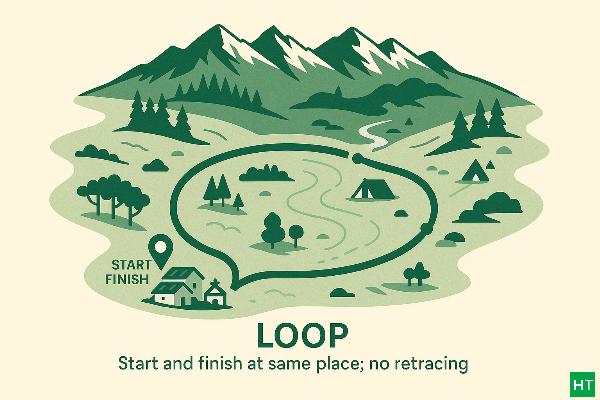
Loop (closed circuit from one trailhead)
What it means
Start and finish at the same place without retracing ground — variety throughout with one tidy base. Keep junction discipline; a single closure can force a reroute.
HT Examples
Dayara Bugyal | Bhrigu Lake | Winter Kuari (Joshimath circuit) | Brahmatal + Ali Bedni Bugyal combo
Lollipop (Balloon) loop
What it means
A shared “stem” leads to a loop at the far end; you return by the same stem. Best of both worlds — loop novelty, single-base simplicity. Place camps to minimise déjà vu on the stem; do summit/viewpoint spurs light.
Examples
Brahmatal | Kedarkantha |

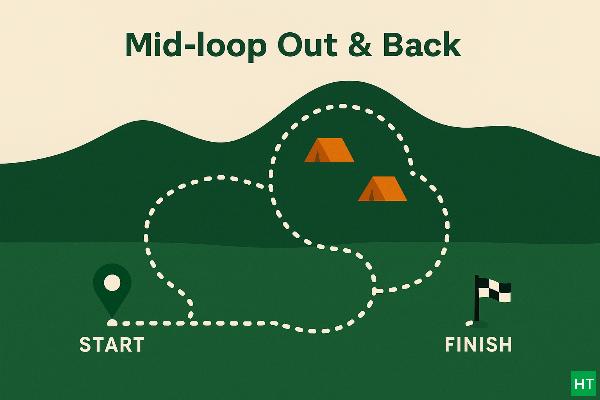
Mid-loop out-and-back (hybrid)
What it means
You still start/finish at the same base, but there’s a loop in the middle to avoid re-ascending the same ridge. On Goechala, most teams descend via the forest traverse Kokchurang → Phedang, bypassing Dzongri on exit.
Example
Point-to-point (traverse / crossing a pass)
What it means
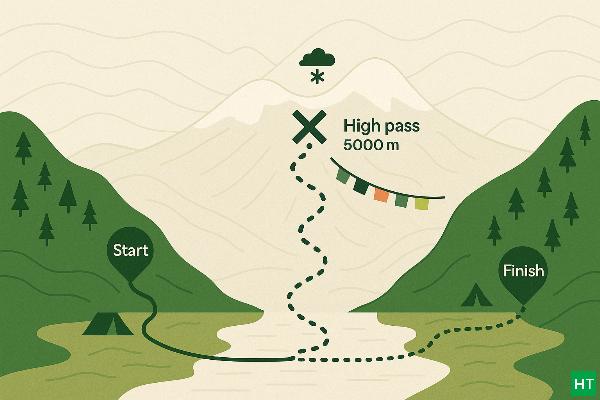
Start and finish in different valleys — often up and over a high pass into a new landscape and culture. No repeats; big contrasts. Plan like a pro: stage your vehicle at the finish first, shuttle to the start, and stash city kit in a hub you’ll return to after the exit.
Examples
Bali Pass (Ruinsara → Yamunotri/Janki Chatti) | Pin Parvati (Parvati → Pin/Spiti) | Kalindi Khal (Gangotri → Badrinath) | Parang La (Ladakh → Spiti)
Horseshoe (arc traverse)
What it means
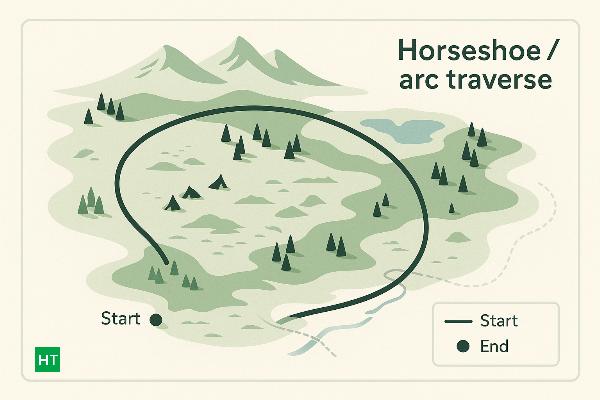
A curved point-to-point that sweeps a basin or ridge in a broad ∩. You don’t repeat ground, and the scenery “turns” day by day. Same shuttle/left-luggage logic as other traverses.
Example
Kashmir Great Lakes | Sikkim Alpine Lakes | Spiti Valley Homestay Trek
Massif circuit (parikrama)
What it means
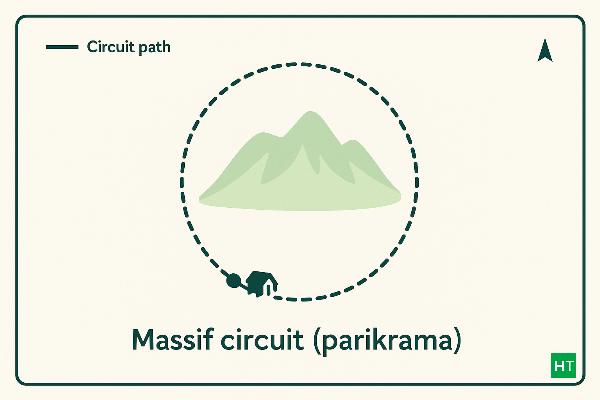
A loop that encircles a range or massif for 360° perspectives. Permits and weather windows can differ around the circle; one blocked segment can break the ring, so know your cut-throughs.
Example
Kinnaur Kailash Circuit
Scan & compare
| Trail type | Definition (1-line) | When it shines | Plan for | HT itinerary angle | Examples |
|---|---|---|---|---|---|
| Out & back | Up a valley to a high point; return the same way. | Simplest logistics; steady gradients; second-chance on views. | Add light-pack side trips from high camp; manage crowding near the base. | We keep the core clean and add meaningful variety where terrain allows. | Har Ki Dun; Tapovan; Satopanth Tal |
| Fork (Y-junction) | Common approach, then two day-hike arms from the same base. | Two distinct objectives from one tidy base. | Sequence gentler → steeper; respect park timings and cut-offs. | We brief sequence/timings so both arms stay unhurried yet safe. | Ghangaria: Valley of Flowers & Hemkund |
| Loop | Start/finish same place; no retracing. | Variety every day from one base. | Junction discipline; a closure can collapse the loop. | Where safe connectors exist, we convert O&B into a true loop. | Dayara Bugyal; Winter Kuari |
| Lollipop (Balloon) | Shared stem → loop → return on stem. | Loop novelty + single-base ease. | Place camps to minimise déjà vu; keep summit spur light. | We deliberately design lollipops where others keep O&B. | Brahmatal |
| Mid-loop O&B | Loop inserted in the middle to avoid retracing high ground. | Fresh exit miles; softer gradients on descent. | One long, mostly level traverse day; early start and steady pacing. | We use forest/meadow traverses where permitted to reduce re-ascents. | Goechala (Kokchurang → Phedang traverse) |
| Point-to-point (traverse / pass) | Start ≠ finish; up and over into a new valley. | Maximum contrast; no repeat miles. | Finish-side vehicle; hub stashing for spare kit; clear pass-day timing. | Signature HT logistics: traverse + short drive back to base where viable. | Bali Pass; Pin Parvati |
| Horseshoe (arc) | Curved traverse sweeping a basin/ridge. | Photogenic progression; minimal overlap. | Limited shortcuts mid-arc; same shuttle rules as traverses. | Used when basin geometry supports safe exits. | Kashmir Great Lakes |
| Massif circuit (parikrama) | Loop encircling a range/massif. | 360° perspectives; strong completion feel. | Permits/weather differ around the ring; have a cut-through. | Prefer circuits when snow and trail condition allow. | Winter Kuari circuit |
How we turn shapes into better itineraries and experience
We at HT, don’t default to the easiest logistics. If a safe connector exists, we’ll turn an O&B into a lollipop or a loop; where season and permits allow, we’ll design a compact circuit or a traverse with a short drive back to base. See how we stitch homestays and camps into a week-long Lohajung circuit to maximise fresh ground and comfort: Lohajung circuit (homestays + camps). You’ll notice the same craft on Ali–Bedni Bugyal (loop/short-transfer variants), Bagji Bugyal (elegant ridge exits), and Bajre Dara (ridge-first design).
Pack precisely for a traverse (carry optimal, nothing deadweight)
- Leave non-trek kit down in a hub you’ll certainly return to (not at the interior start roadhead).
- Build around the three-layer system you’ll actually wear most days (base, insulation, shell), then add only what the week’s forecast and passes demand.
- One sleep system, one waterproof, one warm hat, one sun hat. Duplicates creep weight.Examples on how to pack light.
- Hands-free on the move: poles, head torch, easy-reach snacks, liner gloves for wind.
- Power: one disciplined charge plan beats multiple heavy banks; put your phone in flight mode while walking. Learn simple hacks on saving your batteries during a trek.
- Water: refill and treat at known sources; avoid hauling dead weight between reliable points.
So what type of Himalayan experience would you like? Feel free to connect and tailor your trek.
Explore 55 Himalayan treks—from beginner-friendly meadows to summit, tea-house homestays to remote high-pass expeditions. Browse by region below to find current, field-tested itineraries across Uttarakhand (Garhwal & Kumaon), Himachal (including Lahaul–Spiti and Kinnaur), Ladakh & Kashmir, and the Eastern Himalaya (Sikkim, Darjeeling–Kalimpong). Each archive links to live trip pages with dates, altitude profiles, gear notes and realistic pacing.

Comments