


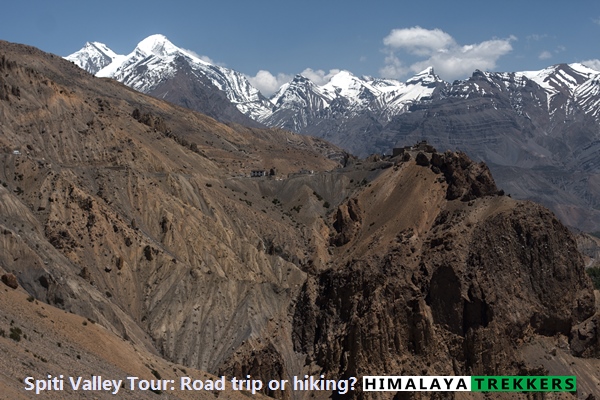
Spiti rewards two very different ways of travelling: a slow, lived‑in village stay where you walk between high settlements and sleep in local homes, or a faster, comfort‑first road circuit that covers “everything” with a vehicle with you. This guide helps you choose—then shows you how to blend both if that’s the smarter call for your time, fitness, and altitude history.
Short answer:
- Choose the Spiti Homestay Trek if you want to live in high villages (4,200–4,600 m), walk between them, and actually know the people and their monasteries. Multiple nights will be above 4,000 m, so acclimatisation and a calm pace are non‑negotiable.
- Choose the Spiti Road Trip if you want coverage, comfort, and faster access to evacuation/medical help, keeping most nights around Kaza (~3,650 m) and day‑tripping to the higher villages.
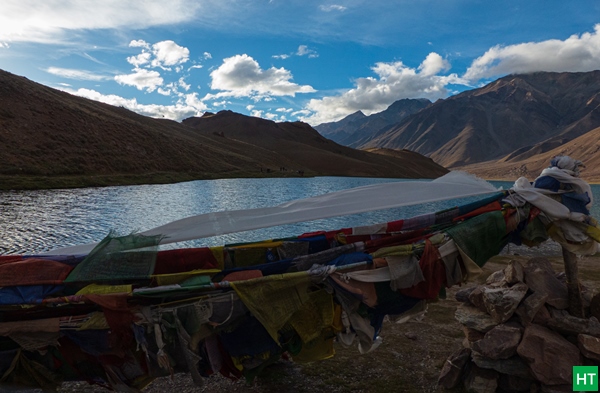
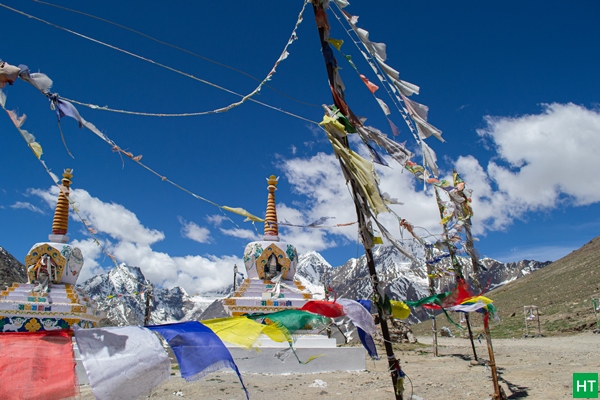
- Blend both if you want the best of each: drive in, insert a 2–3 day homestay micro‑trek, and (if Kunzum La opens) exit via Chandratal. Kunzum La typically opens from late May to mid‑June, but always verify the road status for your dates.
Who should trek, who should drive (and when to mix both)?
Pick the Spiti Homestay Trek if you:
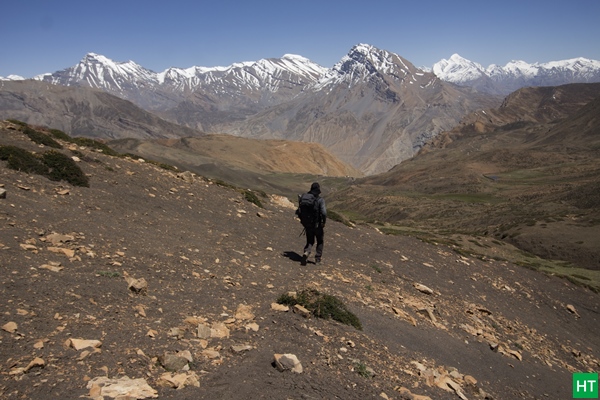
- Prefer a slow, high‑village, ground‑level experience across Langza, Hikkim, Komic, and more.
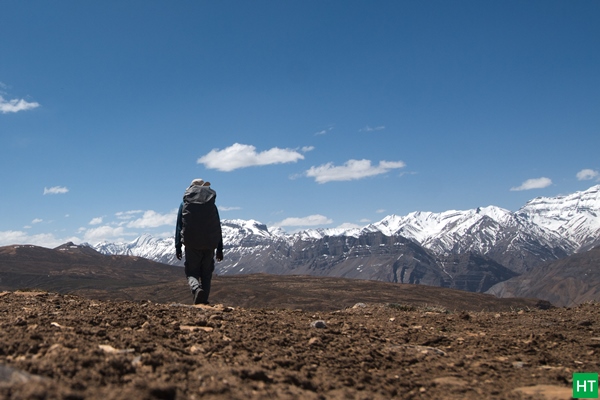
- Can handle multiple nights > 4,000 m and 3–6 hour walking days at altitude.
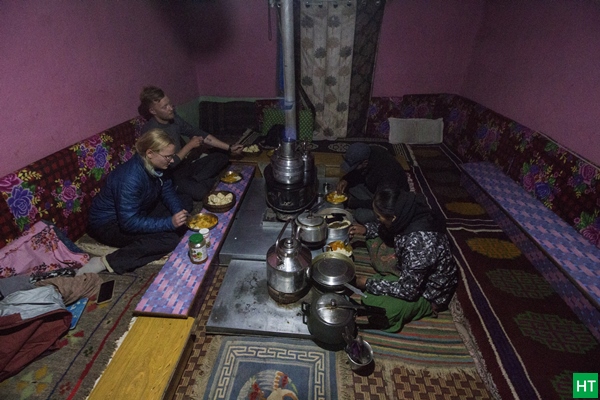
- Want no crowds, fewer vehicle transfers, and long conversations around a bukhari.
Pick the Spiti Road Trip if you:
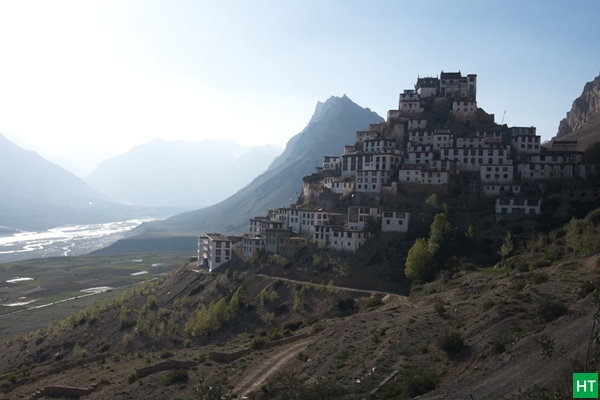
- Have 5–7 days and want to see Tabo (996 CE), Dhankar, Key, Kibber, Langza, Hikkim, Komic, Kunzum La, and Chandratal quickly.
- Need higher comfort, easier logistics, and faster descent options.
- Are travelling with kids, older parents, or mixed‑fitness groups.
Hybrid (recommended for many):
Drive → 2–3 day village homestay micro‑trek → drive out via Kunzum La / Chandratal (if open). You get meaningful village time without stacking too many very high nights.
 Altitude & AMS:
Multiple nights on the Homestay Trek are above 4,000 m. Stage your ascent, give time for acclimatisation around (walk high, sleep low, if possible), hydrate, and descend if symptoms persist (headache, nausea, movemental disorientations, ataxia). Read our full guide: Acute Mountain Sickness – prevention, symptoms, treatment. Road trippers should also follow the same to avoid any AMS -related symptoms and illness.
When to go: seasons, passes & wildlife windows
Trekking season (June–September, with ~15‑day shoulders on either side)
High-village trekking works best from June to September, when Kunzum La is usually open and village trails are clear of deep snow. You can sometimes stretch it from May into October as shoulder weeks, but expect snow patches early, cold nights late, and shorter operational windows on high passes.
Roads can still be disrupted by monsoon landslides on the Kinnaur approach or in the Kullu – Manali side, even though Spiti itself sits in a rain shadow. Consider planning buffers.
Road trip window (longer, thanks to Shimla–Kinnaur access)
The Shimla–Kinnaur–Kaza axis is largely open year‑round, barring weather‑triggered closures (monsoon slides on the Satluj side Nalas or heavy winter snow in upper Spiti). The Manali–Kunzum La–Kaza leg is seasonal: it typically opens from late May to early/mid‑June and closes by October/early November. If you want a shorter/safer Spiti sampler outside the Kunzum La window, the Shimla side gives the road trip a clear advantage over the trek (which needs consistently open village approaches and trails).
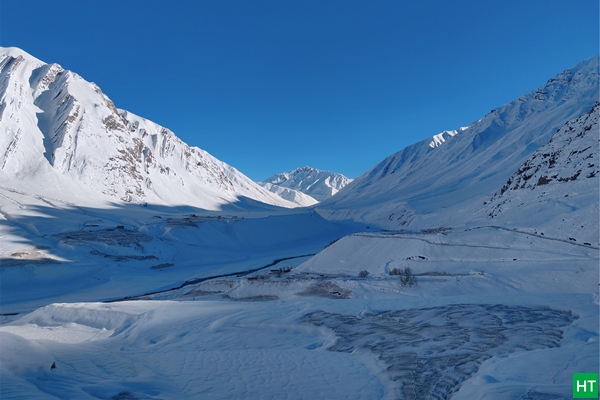
Winter (December–March): snow leopard expeditions –December to March is when snow leopards descend to lower, huntable elevations around Kibber–Chicham; specialised vehicle‑supported, village‑based expeditions run then. Expect -20°C (or lower), short days, ice, and very limited services—this is not trekking‑season terrain, but a road‑access, fixed‑base wildlife program with long stakeouts, scopes, and local spotter networks.
Decision Matrix (at a glance)
This matrix boils your Spiti choice down to the handful of variables that truly change the plan: season window, nights above 4,000 m, daily walking effort, rescue/logistics ease, crowds, connectivity, cost, and pass dependence.
| What really matters | Homestay Trek | Road Trip | Hybrid (Drive + 2–3 day micro trek) |
|---|---|---|---|
| Typical days required in Spiti (ex city) | 6–8 days | 5–7 days (6–9 for a calm circuit) | 6–8 days |
| Max sleeping altitude (typical) | 4,400–4,600 m (Hikkim/Komic) | ~3,650 m (Kaza), higher villages as day trips | Mostly 3,650 m with 1–2 nights > 4,000 m |
| Walking effort | 3–6 hrs/day at altitude | Short, optional hikes only | 1–3 trek days of 3–5 hrs |
| Daily driving kms | Low (support vehicle hops only) | High (multiple 80–150 km days) | Moderate (front/back loaded) |
| Rescue / medical access | Limited & slower (must descend sensibly) | Easier (vehicle always with you) | Easier overall, with a short high exposure block |
| Network / connectivity | Patchy once you leave Kaza/road grid | Better (still unreliable in pockets) | Mostly road grade connectivity |
| Cultural depth | Very high — you live in villages | Surface level unless you slow down | High where it counts |
| Primary season window | June–September (± ~15 days) | Shimla–Kinnaur access near year round; full Manali–Kunzum–Chandratal only late May/June–October |
Same as road, with the trek block kept inside June–September |
| Crowd levels (Jun–Sept) | Low to moderate | High on Kaza–Langza–Hikkim–Komic loops & Chandratal | Moderate |
| Budget band (indicative) | ₹₹–₹₹₹ (guide-led logistics, small groups) | ₹–₹₹₹ (depends on vehicle share & stay grade) | ₹₹–₹₹₹ |
| Season / pass dependence | Less — works even if Kunzum La is shut | Full Manali–Kunzum–Chandratal circuit relies on late May–June opening | Moderate — can route around closures |
Road, weather, and pass status change quickly in Himachal—verify the week you travel.
Why Spiti forces a decision (and rewards both)
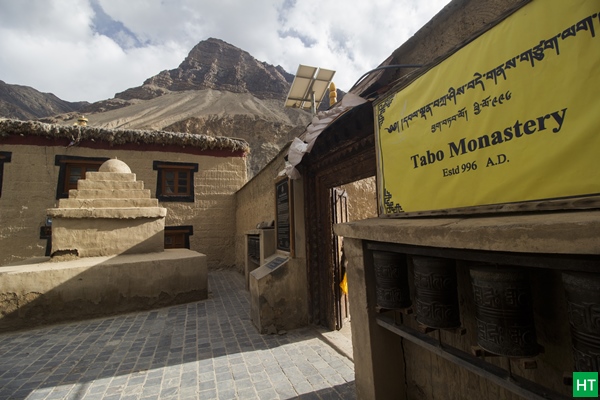
Spiti—“The Middle Land”(was called ‘piti’ in a local dialect of a Sino-Tibetan language, which roughly translates to ”The Middle Land.”) —is stark, high, and culturally layered. Tabo Monastery (founded 996 CE) is the oldest continuously operating Buddhist enclave in the Himalaya. The same geography that preserves its monasteries also makes travel choices binary: go wide (by road) or go deep (on foot).
Also, while Spiti lies in a rain shadow, approach roads can still be disrupted in the July–Aug monsoon, even as media pieces increasingly pitch Spiti as a monsoon escape—expect crowds in popular spots, and plan buffers.
Option 1: Spiti Homestay Trek (village to village; slow by design)
You walk between high villages, sleep in local homes, and spend evenings inside kitchens warmed by bukhari stoves. Expect short- to medium-duration but high‑altitude walking days, basic but warm hospitality, and a deliberate, culturally rich pace.
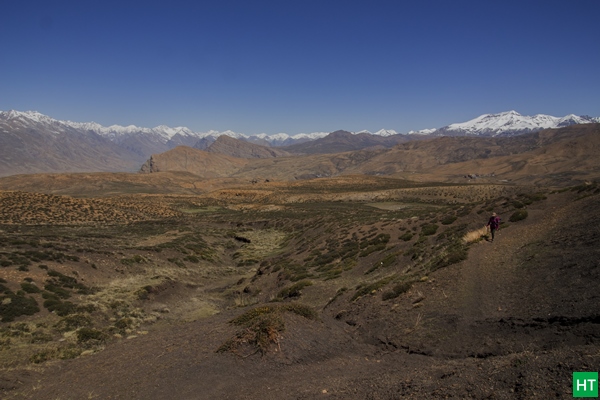
6‑day core (high‑village) suggested Itinerary:
Day 1: Arrive at Kaza (3680 m / 12073 ft). Active acclimatisation day. Roam around the streets of Kaza, the last major township on the trek. Stay out of your room as much as possible. Hotel/Homestay
Day 2: Drive to Langza (4280 m / 14040 ft) via Ki Monastery and Kibber (~4200 m / 13800 ft). We’ll start post breakfast. En route we’ll visit Key Monastery and explore Kibber Village. We’ll have lunch at Kibber and then drive to Langza. – 35 km – 4 to 5 hours including the breaks. – Homestay
Day 3: Trek from Langza to Komic (~4460 m / 14630 ft) via Hikkim—3to 4 hours—Homestay
Day 4: Trek to Demul (~4380 m / 14370 ft) – 5 to 6 hours – Homestay
Day 5: Trek to Lhalung (~3720 m / 12220 ft) via Lingti Gorge—4to 5 hours—Homestay
Day 6: Trek to Dhankhar (~3750 m / 12300 ft)—2 to 3 hours—and drive to Kaza (3680 m / 12073 ft)—~35 km—1to 2 hours or Tabo (~3250 m / 10660 ft). – ~32 km – 1 to 2 hours or Nako (~3625 m / 11890 ft) – ~95 km – 3 to 4 hours
8‑day extended variant (more monasteries, better acclimatisation spread)
Day 1: Arrive at Tabo (~3250 m / 10,660 ft) via Sumdo, Gue Monastery, and Nako. (Drive from the Shimla side). Visit the 500-year-old naturally preserved mummy of a Buddhist monk at Gue Monastery and then continue to Tabo to visit the oldest monastery of Spiti. Hotel/Homestay
Day 2: Post breakfast, visit the century-old meditation caves a little above Tabo & return—1 hour. Post lunch, drive to Kibber (~4200 m / 13800 ft) via Kaza, visit Chicham village and Chicham gorge, and return to Key Monastery. – 75 km – 4 to 5 hours including the breaks. – Stay at a dormitory inside the monastery or a homestay in Key Village.
Day 3: Explore Key Monastery and drive to Langza (4280 m/14040 ft)—Homestay
Day 4: Trek from Langza to Komic (~4460 m / 14630 ft) via Hikkim—3to 4 hours—Homestay
Day 5: Trek to Demul (~4380 m / 14370 ft) via Komic La (~4780 m / 15685 ft)—5 to 6 hours—Homestay
Day 6: Trek to Lhalung (~3720 m / 12220 ft) via Shanglung village at Lingti Gorge—3to 4 hours. Visit the old monastery at Lhalung, which is also known as Sarkhang or Golden Temple, the second oldest monastery of Spiti Valley (~10th century AD). – Homestay
Day 7: Trek to Dhankhar (~3750 m / 12300 ft) – 3 to 4 hours
Day 8: Trek to Dhankhar Lake in the morning and drive to Kaza (3680 m / 12073 ft). – ~35 km – 1 to 2 hours or Nako (~3625 m / 11890 ft) – ~95 km – 3 to 4 hours
Food & stay
- Western toilets are increasingly common; traditional Spitan dry toilets still exist in some homes.
- Expect simple, nutritious meals—thukpa, momos, dal/rice, seasonal greens, and plenty of butter tea.
Who this fits
- Trekkers and hikers who value depth and close time with local families over quick, road‑led coverage.
- Travellers who can respect altitude and move conservatively.
- Photographers/writers who need time and stillness, not a checklist.
Option 2: Spiti Road Trip (regular & offbeat)
The classic 6–9 day road plan is popular because it’s logistically simple, medically safer (vehicle at hand), and packs the “must‑see” set into a short window. The flipside: crowds in June–Sept and a tendency to rush through villages.
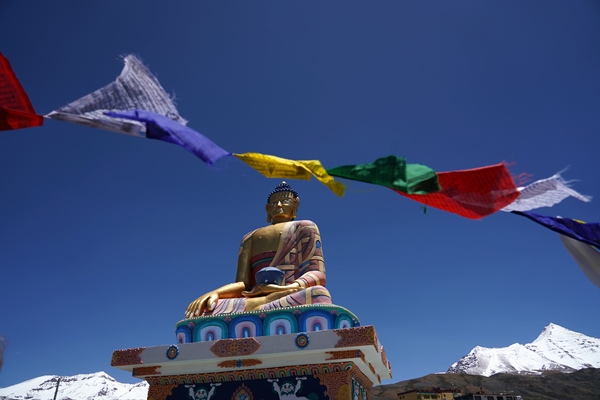
Common fast template
Day 1: Arrive at Tabo via Nako and Sumdo from the Shimla side.
Day 2: Drive to Kaza via Dhankhar
Day 3: Drive to Kibber, Chicham, Langza, Hikkim, Komic, and Key Monastery and return to Kaza.
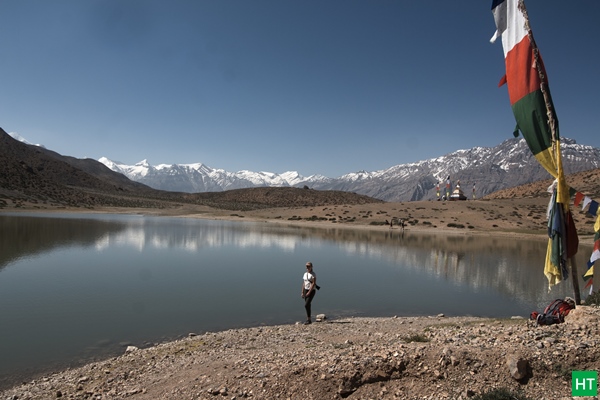
Day 4: Drive to Chandratal via Kunzum La if Kunzum La is open, or drive back to Nako.
Day 5: Drive back to Manali from Chandratal / Drive back toward Shimla.
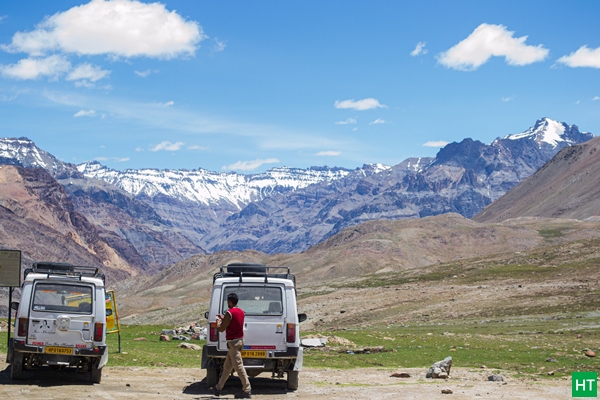
Of course there are reasons why this circuit is popular. Motorable road connectivity is good enough so that bigger groups in tempo travellers can travel to each of these above destinations. In Tabo and especially at Kaza, you’ll get comfortable stay options along with different cuisines of food and strong network connectivity. Also, this 5–6-day round trip fits in a week-long window from the nearest big cities like Delhi, Chandigarh, etc.
And Spiti is getting popular. Especially in the narrow window of June to Sept, when Kunzum La remains open and it can be accessed from the Manali side via the Atal tunnel, it sees the maximum flow of tourists, and Kaza becomes a tourist hotspot. During this time, to avoid the majority of the crowd and to explore Spiti in a peaceful manner, we can suggest the following itinerary:
Offbeat circuit (quieter nights, smarter acclimatisation)
Day 1: Arrive at Tabo via Sumdo, Gue Monastery, and Nako.
Day 2: Drive to Lhalung via Dhankhar.
Day 3: Drive to Langza via Kaza, Hikkim, and Komic.
Day 4: Drive to Chandratal via Key Monastery, Kibber, Chicham, and Losar, Kunzum La if Kunzum La is open, or drive to Key Monastery, Kibber, and Chicham and return to Nako.
Day 5: Drive back to Manali from Chandratal / Drive back toward Shimla.
Needless to say, there are scopes to play around with if you have time in hand.
- You can take a side trip to Mud village, which serves as the base camp for both the Pin Bhaba and Pin Parvati treks. You can easily add up a one-day stay at Kaza by skipping night stays at either Lhalung or Langza.
- With a motor bike/car at your disposal, you can cover the following circuit from Shimla to Manali in 9 days:
- Tabo (via Nako, Sumdo, Gue) – Lhalung (via Dhankhar) – Mud – Kaza (to relax and rejuvenate) – Langza (via Hikkim & Komic) – Kibber via Key Monastery – Losar via Chicham – Chandratal (via Kunzum La, Batal) – Manali (via Atal Tunnel)
Winter road trips for snow leopards (Dec–Mar)
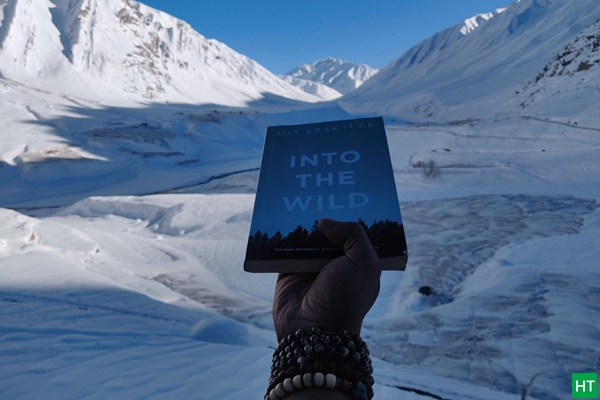
If your goal is to see snow leopards, target late January to early March. You’ll be based in Kibber/Chicham (~4,200 m), move by vehicle plus short hikes, and work with local spotters. It’s demanding—temperatures can drop to −20°C, rescue is weather‑dependent, and patience behind a scope is half the game—but probabilities peak in this window.
Food & stay
- Kaza has the largest spread of cafés/hostels/hotels; villages retain basic, warm homestays—similar to what you experience on trek base camps.
Who this fits
- First‑timers to altitude, families, or anyone prioritising comfort & quick descent options.
- Self‑drivers confident on narrow, broken mountain roads (or hire a local driver).
The 7 differences that actually decide it
- Depth vs. breadth
- Trek = Spend more time in fewer villages, understand more.
- Road = cover everything, understand less (unless you slow the plan).
- Altitude burden
- Trek = several nights > 4,000 m.
- Road = mostly 3,650 m (Kaza), hit higher villages in the day.
- Effort
- Trek = 3–6 hr walking days at altitude.
- Road = seated most of the time; short hikes optional.
- Rescue / medical access
- Trek = limited, slower.
- Road = easier, faster descent to Kaza CHC.
- Crowds
- Trek = low once you’re off the road grid.
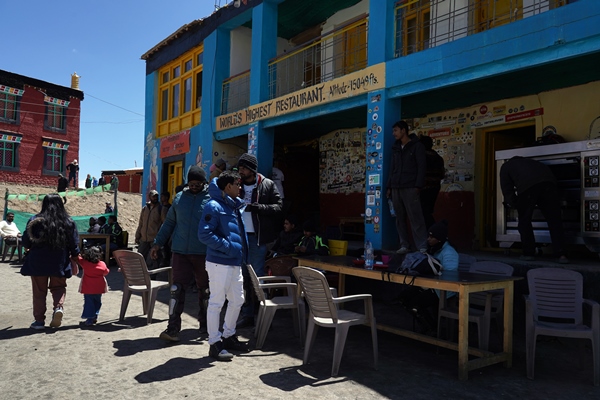
- Road = busy Kaza–Langza–Hikkim–Komic day loop; Chandratal on long weekends.
- Wildlife angle
- Winter homestay belts around Kibber/Chicham have real snow leopard odds.
- Summer road trips rarely intersect serious tracking.
- Season/pass dependence
- Trek = works even if Kunzum is shut.
- Road (full Manali circuit): needs Kunzum La to open (late May–mid‑June typical).
Monasteries you must not skip (either way).
- Tabo (996 CE)—oldest continuously operating Buddhist enclave in the Himalaya.
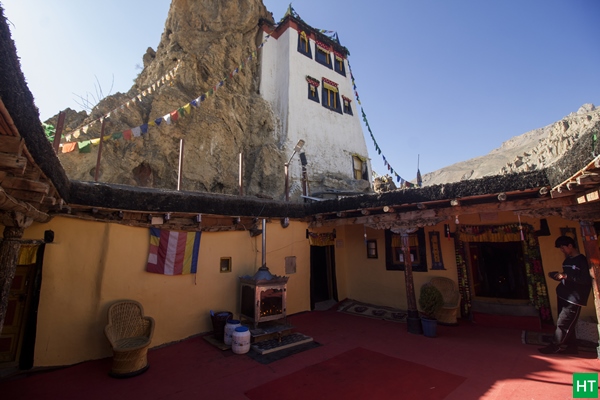
- Key—the iconic, multi‑tiered gompa above the main valley.
- Dhankhar—dramatic cliffside monastery and Dhankhar Lake hike.
- Kungri (Pin Valley)—cham dances and winter culture window.
Use our Spiti Monasteries Guide to stitch them efficiently into your trek or road plan.
FAQs
Is Spiti really “fine” in the monsoon?
Relatively, Spiti is drier than Kullu–Manali because it’s in a rain shadow, but approach roads can still see landslides and closures. Plan buffers.
Is Hikkim’s post office actually the highest in the world?
It’s widely cited at ~4,400 m and popularly claimed as the world’s highest post office. Either way, post a card—half the magic is the idea.
How many days do I need?
- Road trip: 5–7 days (6–9 for a calmer, offbeat plan).
- Homestay trek: 6–8 days in Spiti alone, plus approach/exit and buffer. (Hybrid fits similar windows.)
When does Kunzum La open?
Typically late May to mid‑June, but it varies with snowfall and clearance. Always confirm immediately before your trip.
What’s the best month to see snow leopards in Spiti?
Late January to early March is the prime window. Heavy snow forces prey (and leopards) into lower, more scannable bowls around Kibber–Chicham. These are road‑accessed, fixed‑base expeditions, not trekking programs. Expect biting cold (often below −20°C), thin air, and long hours behind a scope.
Plan it with HT.
- Go all‑in on a lived‑in village stay: Book our Spiti Valley Homestay Trek—we’ll stage your acclimatisation ladder, keep safety conservative, and ensure you live the valley, not just look at it.
- Prefer a hybrid? Tell us your time, altitude history, and comfort expectations. We’ll splice a 2–3 day village block into a road circuit—Pin Valley, Losar, Chandratal, and Balari Top can all be integrated when roads allow.
- Culture‑first? Pair this with our Spiti Monasteries Guide to align monasteries, caves, and festival dates without rush.
Need more help to tailor a plan for you? Feel free to reach us in a way that suits you better below:
All photos are shared by HT trekkers, the recce, and staff team members.



Comments