

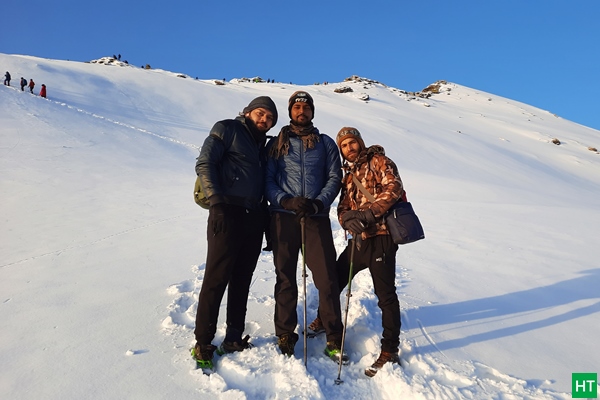
The Himalayas in winter possess a rare kind of charm; the sort that persuades ordinary people to wake up at 4 am, strap on backpacks heavier than their emotional baggage, and gleefully march into knee-deep snow. Powdered forests, sparkling ridges, and the crunch of frost under your boots can feel almost spiritual… at least until you slip and execute a dramatic, unplanned sit-down.
Fortunately, winter trekking is far less treacherous when you understand the mechanics of moving over snow. With a handful of practical techniques, the right gear, and an attitude somewhere between mindfulness and mild caution, you’ll find yourself gliding over Himalayan winter trails with the confidence of someone who genuinely knows what they’re doing.
This extended guide covers non-technical winter trekking not mountaineering and teaches the essential skills for safe travel on snowy and occasionally icy trails.
Before We Begin: Trekking vs. Mountaineering, the Difference
Many trekkers confuse winter trekking with mountaineering. It is like mixing a hill walk with a roped climb.
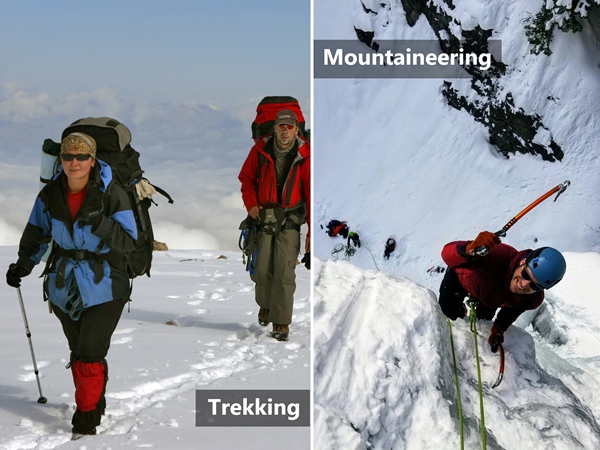
Non-Technical Trekking (Our Focus)
This includes well-known Himalayan winter trails such as:
- Kedarkantha
- Brahmatal
- Dayara Bugyal
- Ali–Bedni
- Sandakphu
- Deoriatal Chopta Chandrashila
- Kuari Pass and many similar treks
These treks:
- Involve marked trails
- Do not require ropes, harnesses, or specialised climbing gear
- May involve snow up to the knees
- Sometimes demand micro-spikes for grip
- Require trekking poles, good boots, and basic techniques
In short: you are hiking through snow, not climbing frozen waterfalls. This article covers only this category.
Mountaineering (we are not discussing it here)
Mountaineering is an entirely different discipline and should not be confused with winter trekking. It operates in terrain where mistakes carry serious consequences and progress depends on technical systems rather than simple walking skills.
It typically:
- Requires advanced equipment, such as crampons with front points, ice axes, helmets, ropes, and the knowledge to use belay and protection systems correctly
- Involves complex and hazardous terrain, including glaciers, crevasses, steep snowfields, exposed ridges, and technical ice or rock walls
- Demands formal training, sound judgement, and hands-on experience under certified instructors to manage risk safely
If trekking is a winter challenge, mountaineering is a high-altitude examination with little margin for error. What follows in this guide focuses solely on the safer, more accessible realm of non-technical winter trekking, where preparation, technique, and judgement are the foundations of safety.
Walking on Snow and Ice: How Not to Perform Accidental Gymnastics
Moving on snow requires precision, not speed. Winter surfaces are unpredictable, often changing texture and stability within a few steps, and they leave little room for careless movement. A measured pace allows you to place each foot deliberately, test the snow beneath it, and maintain balance before committing your weight. In snowy terrain, control and awareness matter far more than how quickly ground is covered.
Short, Balanced Steps
Take deliberate, short strides. Your usual city gait will betray you instantly.
A slightly wider stance helps maintain balance.
Stamping to Secure Steps
On fresh snow, stamp lightly to compress the surface and lock your step.
Think firm, not aggressive — you’re shaping a foothold, not digging for potatoes.
Toes for Climbing, Heels for Descending — The Golden Rule
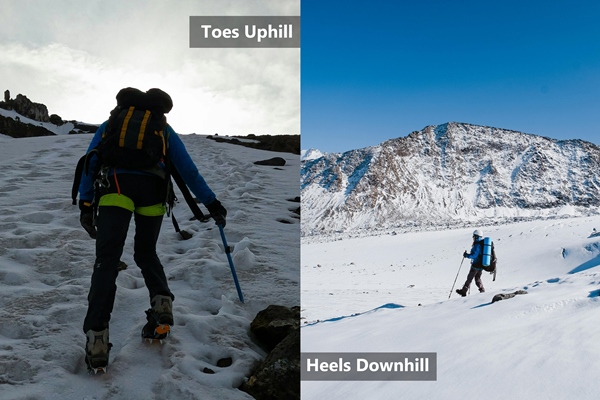
Use Toes While Climbing
- Lean forward slightly
- Dig the toe section of your boot into the snow
- Let your body weight assist the bite
This prevents backward slips and maintains rhythm on inclines.
Use Heels While Descending
- Lean back gently (not too much)
- Plant your heels firmly
- Allow them to act as natural brakes
This technique is elegant, effective, and saves you from many undignified tumbles.
Flat-Foot Technique on Slick Surfaces
When faced with mildly icy or very firm packed snow, place your whole foot down for maximum grip.
Micro-Spikes vs. Crampons: The Correct Choice Matters
This is where many trekkers get it wrong, often assuming that all snowy or icy surfaces behave the same, and that any traction device will do the job. In reality, using the wrong equipment for the wrong conditions can be ineffective at best and dangerous at worst. So before we go any further, let’s set the record straight.
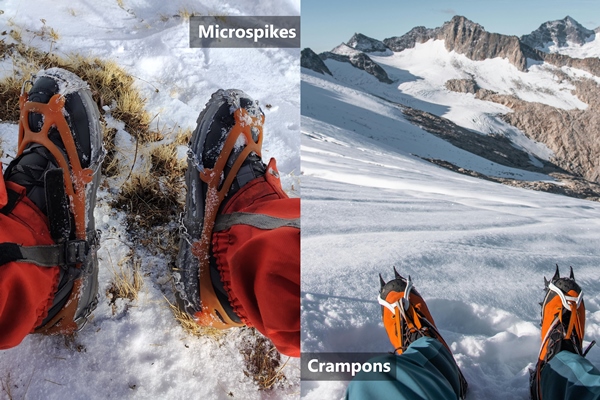
Micro-Spikes — For Hard and Packed Snow (NOT Ice)
Micro-spikes are excellent for:
- Hard-packed snow
- Frozen but non-icy surfaces
- Stable winter trails
They provide traction by biting into firm snow and are not designed for hard, glassy ice.
Crampons — For Hard Ice
When the trail turns icy — truly icy, the kind that looks like polished glass — micro-spikes lose effectiveness.
Crampons are essential for:
- Hard ice
- Icy inclines where slipping is likely
- Steep frozen surfaces
They offer deep, secure penetration into ice and prevent catastrophic slips. These typically require an adjustable crampon snow boot for attachment, as well as some training to walk while using them.
A simple mantra to remember: “Micro-spikes for hard snow. Crampons for hard ice.”
Trekking Poles: The Unsung Heroes of Winter Travel
Poles give extra points of contact — an absolute blessing in winter, when snow and ice constantly test your balance and footing. They transform uncertain steps into controlled movement, helping you stay upright, distribute weight more evenly, and move with greater confidence across slippery or uneven terrain.
Pole Length Matters
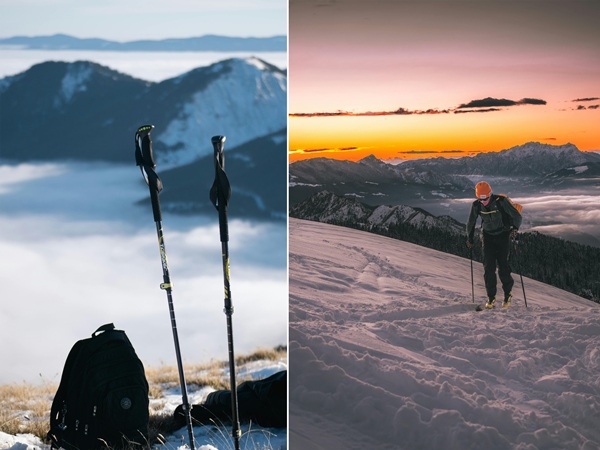
When traversing or moving diagonally on snow, keeping the uphill pole slightly shorter and the downhill pole longer creates a more balanced stance, improves weight distribution, and significantly reduces the risk of sideways slips on sloping terrain. Remember the following as quick reference.
- Shorter for ascents
- Longer for descents
Technique
- Plant poles rhythmically
- Use them to test snow depth
- Probe suspicious depressions
- Maintain balance on diagonal traverses
If trekking poles once seemed unnecessary or excessive, winter conditions quickly reveal their true value, turning them from optional accessories into indispensable tools for balance, stability, and confidence on snow-covered trails.
Traversing Slopes: Move Like You Belong There
Traversing snowy slopes can be intimidating, especially when the ground falls away beneath your feet and the snow offers uncertain grip. However, with the right technique and a calm, methodical approach, this sideways movement becomes controlled, efficient, and almost graceful, allowing you to maintain balance and progress smoothly across the slope rather than fighting the terrain.
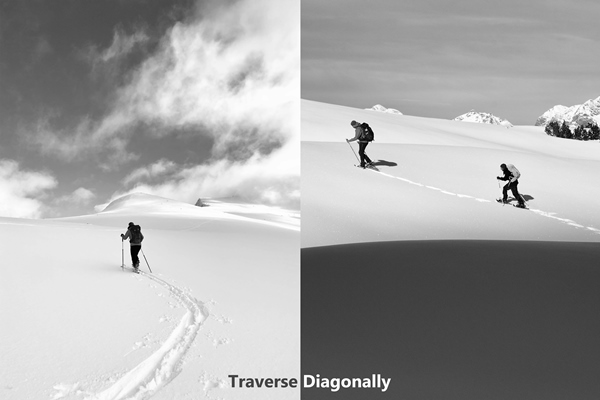
Always Traverse Diagonally
Avoid going straight up or straight down.
Diagonal movement:
- Provides better control
- Conserves energy
- Ensures consistent traction
Kick-Stepping
On steeper sections:
- Use the toe edge of your boot
- Kick small ledges into the snow
- Create a staircase of sorts
These simple habits will make your movement on snow safer, steadier, and far less tiring over long, snow-covered slopes.
Self-Arrest Basics: Stopping a Slip Before It Turns into a Slide
Hopefully, you’ll never need this — but you must know it, because winter terrain allows little time for hesitation, and a quick, instinctive response can mean the difference between a minor slip and an uncontrolled slide.
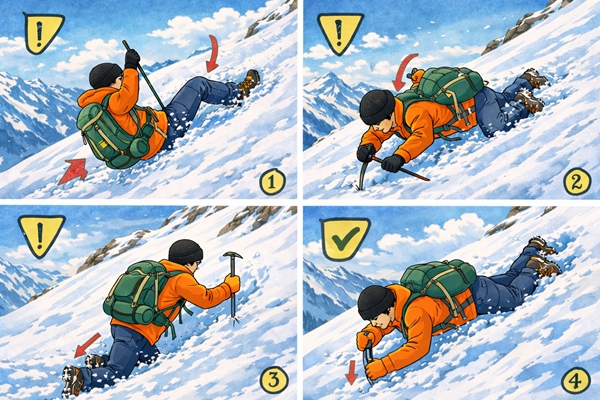
If you slip:
- Roll onto your stomach immediately.
- Dig your elbows, knees, and feet into the snow.
- Spread your weight to slow momentum.
- If carrying an ice axe (rare on treks), drive the pick in and lean onto it.
Practice on a gentle slope under supervision. It’s better to look foolish for five minutes than slide for fifty meters.
Understanding Snow: Your Silent Partner in Winter
Snow is not just “snow.” Its texture, stability, and behaviour change with weather, wind, temperature, and time of day. Recognising these differences dramatically improves safety and helps you choose the right technique and equipment for the conditions underfoot.
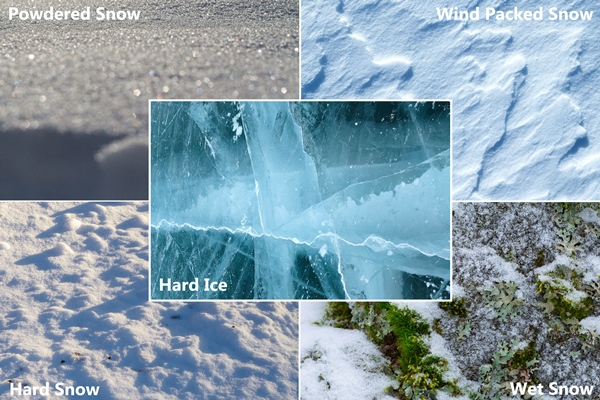
Fresh Powder
Soft, fluffy, dreamy — but hides uneven terrain and drains energy.
Wind-Packed Snow
Firm and usually stable; watch for overhanging cornices along ridges.
Wet Snow
Slushy and slippery; start early in the morning to avoid this.
Hard Snow
Firm, compacted snow that offers good support underfoot but limited natural grip. This is where micro-spikes work best, providing reliable traction without the need for heavier technical equipment.
Hard Ice
Crampon territory. If needed at all on a winter trek, approach it with confidence and of course with the right gear.
Avalanche Awareness: Read the Terrain, Not Just the Scenery
Avalanches are sudden, fast-moving flows of snow that break loose from a slope and rush downhill under gravity. They can be triggered by weather changes, wind loading, or human movement, and even small avalanches can be dangerous in confined terrain.
Although avalanches are uncommon on popular trekking routes, but they are never impossible and always demand respect. Understanding basic warning signs and terrain features helps reduce risk and reinforces safer decision-making in winter conditions.
Warning Signs
- Recent heavy snowfall
- Sudden warming
- Wind-loaded slopes
- Hollow “whumpf” sounds
- Visible slide paths or cracks
Safety Essentials
- Stick to the established winter trail
- Follow your trek leader’s instructions
- Avoid venturing onto steep open slopes alone
The mountains reward patience more than bravado. Calm decisions and steady movement reduce risk. Rushing usually leads to mistakes.
Saving Energy in Snow: Travel Smart
Snow trekking is demanding, even for seasoned hikers, as deep snow, cold temperatures, and reduced traction place constant strain on the body. Without thoughtful pacing and energy management, fatigue sets in quickly and compromises both safety and enjoyment.
To conserve energy:
- Follow in a single file on fresh snow
- Distribute the role of trail-breaking
- Maintain a slow, steady pace
- Sip warm fluids regularly
Energy management is key to enjoying winter in the mountains rather than enduring them, because cold conditions and snow-covered terrain amplify every effort you make. When energy is conserved through steady pacing and smart movement, winter trekking becomes a rewarding experience instead of a slow battle against fatigue.
Footwear and Layering: Comfort Is a Safety Tool
Good winter trekking depends on good attire. In cold and snowy conditions, clothing is not about comfort alone but about safety and efficiency. The right footwear and layering system help regulate body temperature, manage moisture, and prevent cold-related problems before they begin.
Footwear
- Waterproof boots
- High-ankle support
- Insulated interiors
- Gaiters to keep snow out
Clothing Layers
- Base layer: moisture-wicking
- Mid layer: insulating
- Outer layer: windproof and waterproof
Avoid sweating excessively — wet clothes cool rapidly and strip the body of warmth once you slow down or stop. Managing layers and pace helps keep you dry, comfortable, and protected in cold conditions. Also read this link on how to stay warm during a winter trek on the Himalayas.
The Mental Game: Calmness Is Your Hidden Gear
Winter trekking is as much a mental exercise as it is a physical one. Calm, attentive decision-making keeps movements controlled, reactions measured, and mistakes to a minimum when conditions are cold and unforgiving.
Winter trekking rewards those who move with awareness, take time to assess the terrain, and act with patience rather than urgency. A calm, respectful approach to the mountains keeps decisions clear and movement controlled in challenging conditions.
In brief winter trekking demands:
- Awareness
- Patience
- Calm, measured movements
- Respect for the terrain
Confidence built on skill is the warmest thing you can carry.
Final Thoughts: Move With Skill and the Mountains Will Smile Back
Snow trekking in the Himalayas is a remarkable experience. Vast winter landscapes stretch in every direction. In winter days are usually crystal clear from morning to evening. Under snow, familiar terrain looks completely different.
But this experience remains rewarding only when approached with care. Safe movement and mindful decisions turn beauty into enjoyment, not risk.
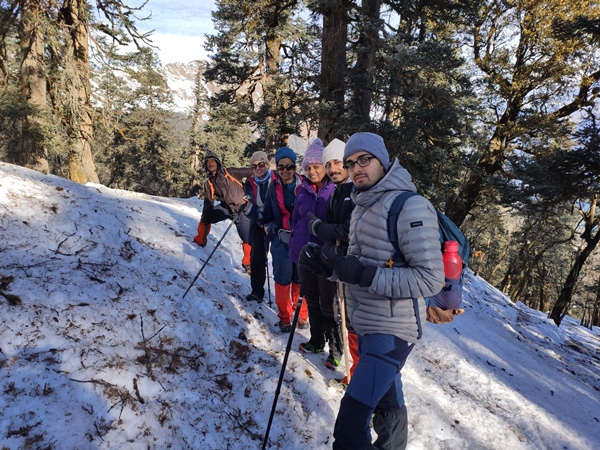
Remember:
- Toes uphill, heels downhill while negotiating a slope covered with snow
- Micro-spikes for hard snow and crampons for hard ice
- Diagonal traverses
- Short, stable steps
- Awareness over bravado
Master these winter techniques and you’ll not only trek safely — you’ll trek with comfort and confidence.

Comments