

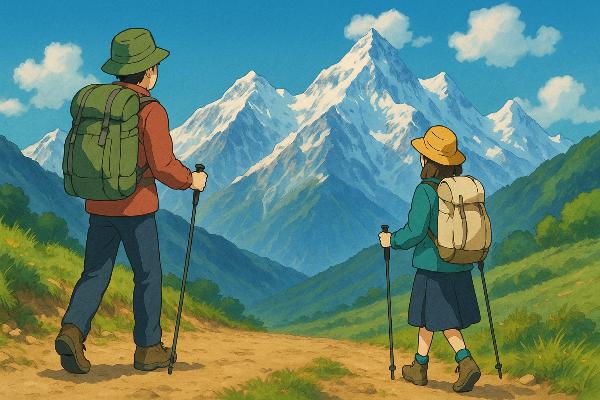
A long trekking/mountaineering excursion requires adapting to the harsh mountain environment. As one spends many days living and moving through this challenging environment, certain knowledge and awareness are essential for a safe, healthy, and rewarding experience. Therefore, one must learn how their body reacts to the cold and the mechanism of altitude sickness. To prepare for these two crucial elements, here are the steps that need to be addressed and taken care of:
Nutrition and Hydration
To adapt to the cold and the altitude and to build endurance, one must eat and drink well. The body needs caloric energy; these calories are obtained from food. The sedentary adult consumes an average of 2200 calories daily. In the mountains, these amounts can double or triple, depending on conditions and the duration and intensity of the activity.
- Start your day with a proper breakfast of a balanced nutritional mix. Carbohydrates are the primary fuel. They are used to produce body heat and energy to sustain activity.
- The source of the energy comes from glycogen, which is stored in the liver in small amounts and therefore must be replenished quickly during the activity. Eating regularly prevents you from running out of energy on a long day, prevents muscle cramping, and protects your health.
- Foods that you can use: Dry fruits (figs, raisins, apricots, dried cranberries), nuts (walnuts, almonds, cashews), peanuts, energy bars, and seeds (sunflower seeds, sesame, pumpkin seeds, etc.)
[Be aware of nut allergies or any other allergies or intolerances to the food.]
- After a long day, eat a proper dinner – a mix of carbohydrates, fat, and protein – to replenish the body and recover during the night – rice, bread, butter, cheese, olive oil, eggs, legumes, etc. A carefully planned menu is vital for performance and a completely enjoyable experience.
- Hydrating throughout the day is a very important factor in performing well throughout the day.
- Start the day with a hot brew and carry your water (preferably in an insulated water bottle) and a sports drink or hydration mix with you. Avoid too much sugar in the drinks. Our body needs at least 1.5-2 litres of water in the mountains. After a long day of activity, drink a lot of water after reaching the campsite until your urine is clear.
Cold
The higher we go, the colder it becomes. Atmospheric air temperature drops by 1.2 degrees Celsius for every 200 metres, or by 6 degrees Celsius for 1000 metres. At higher altitudes, the body requires extra energy when it is working hard. Thus, when a person starts to feel fatigued, it is hard to generate body heat. At first, one begins to feel cold in their extremities, and then it spreads to vital organs. Knowing how to recognise and treat symptoms of hypothermia is crucial to protect oneself.
Hypothermia
What is hypothermia?
When a person’s core temperature falls to 35 degrees Celsius or below, it is the onset of hypothermia.
Cause of Hypothermia
- Not Generating Enough Heat: Exhaustion, malnutrition, and lack of fitness limit heat generation.
- The exposure to cold for too long: improper clothing/insulation, poor planning.
Prevention of Hypothermia
- Good nutrition and proper hydration are necessary to generate body heat and thus lower the chances of the onset of hypothermia.
- A fit and well-trained person produces muscular activity for a longer period of time, contributing to generating more body heat.
- To conserve body heat, aim to stay dry and protected from the wind. Invest in clothing made from breathable fabrics and proper wind-protective material. Remove layers of clothing before overheating, and add layers of clothing before getting cold.
- Protect sensitive extremities (hands, feet, face, nose) from cooling by wearing appropriate clothing.
Symptoms of Moderate Hypothermia and Treatment in the Field
This is the only stage of hypothermia during which it is possible to warm a victim back up in the field.
Symptoms
- Intense shivering
- Taciturnity, difficulty speaking
- Loss of coordination
- Cannot execute complex movement
Treatment
- Insulate the victim from the ground
- Give the victim warm fluid.
- Apply body heat, or warm/heated objects, to the person’s torso.
- Shelter the victim from the wind
- Reduce heat loss
- Put a survival blanket above the victim.
- If the clothes are wet, replace them with dry ones.
Frostbite
What is Frostbite?
Frostbite is an injury to the skin and underlying tissues caused by freezing temperatures. It is a serious condition that can lead to permanent tissue damage. It most commonly affects extremities and exposed areas, like fingers, toes, nose, ears, face, etc.
Cause of Frostbite
- Inadequate clothing and footwear
- Prolonged Exposure
- Windchill and wet clothing accelerate the freezing process.
- Dehydration
- Hypoxia
- Restricted blood flow/poor blood circulation
Prevention of Frostbite
In the field, if you suspect frostbite has set in
- Seek shelter
- Cover the victim’s torso
- Remove any footwear.
- Replace wet socks and gloves with dry ones.
- Warm the extremities for a maximum of 10 minutes (without rubbing them).
- Hydrate
If feeling returns, continue.
Symptoms and Treatment of Frostbite
Symptoms of First-Degree Frostbite
- Whiteness, followed by redness upon rapid warming
- Decreased sensitivity, which returns quickly after warming
Treatment of First-Degree Frostbite
- Take warm, sweet fluids
- Soak the frostbitten area in warm water at 37-38 degrees centigrade for 15-30 minutes.
- Healing in three to four days without any residual effects
Symptoms of Second-Degree Frostbite
- Whiteness, followed by redness upon slower warming
- Loss of sensitivity, which returns more slowly
- Blisters filled with clear fluid, moderate oedema
Treatment of Second-Degree Frostbite
- Take warm, sweet fluids
- Soak the frostbitten area in warm water at 37-38 degrees centigrade for 15-30 minutes.
- Take Aspirin 500-1000 mg for pain and to prevent clotting in small vessels.
- Healing in 10-15 days, persistent hypersensitivity to cold
Symptoms of Third-Degree Frostbite
- Whiteness mottled blue or even black in appearance
- Loss of feeling
- Major oedema in the dead zones upon rewarming
- Large bloody blisters
Treatment of Third-Degree Frostbite
- Take warm, sweet fluids
- Soak the frostbitten area in warm water at 37-38 degrees centigrade for 15-30 minutes.
- Take Aspirin 500-1000 mg for pain and to prevent clotting in small vessels.
In third-degree frostbite, after 10 days, the black areas of dead tissue are either limited to the skin or extend to the bone, resulting in loss of the extremities.
Altitude
As a person goes higher, the air becomes thinner, meaning it contains less oxygen.
The oxygen concentration at sea level is around 21%, and the oxygen is easily available to human bodies due to higher air pressure. The air pressure drops with increasing altitude; thus, less oxygen enters the lungs with each breath, even though the oxygen percentage remains the same. When a person ascends to higher altitudes, their body experiences several changes as it adapts to reduced oxygen. Coping with the altitude is a matter of physical training and modifying your behaviour. The best strategies for a successful excursion into the high altitudes are acclimatisation and quickly recognising and attending to any symptoms of altitude sickness.
Acclimatisation
Up to an altitude of approximately 5,500 metres, complete acclimatisation is possible for a healthy person as long as he/she gives the body sufficient time to adapt to the changed environmental conditions. The body responds to the increased altitude and reduced oxygen supply immediately by increasing the respiratory drive and heart rate. Over longer periods at altitude, there is also an increased production of red blood cells and improvement in oxygen utilisation within the cells.
The Steps of Acclimatisation
- Do not ascend too quickly: above 3000 metres, limit daily elevation gain to 300-500 metres.
- Do not overexert yourself during the first few days.
- Pay attention to the altitude you sleep at: it is better to sleep at an altitude lower than the maximum height reached that day.
- Take Acetazolamide as prescribed:0.25 mg, 2 times a day, for 2 days, before gaining altitude.
- Drink a lot
Recognition and Treatment of Altitude Sickness
Prevention of high altitude illness is most important in any trek/expedition. This is best done by having a good acclimatisation programme. However, if one starts to develop high altitude illness, it is very important to be able to recognise and treat it.
Acute Mountain Sickness (AMS)
This is a relatively common illness at altitude caused by gaining height too rapidly. For the body to adjust to the reduced level of oxygen. AMS usually presents itself within 24 hours of an ascent to a new altitude. Patients with AMS can resume their ascent once the symptoms resolve.
Symptoms of Acute Mountain Sickness
- Headache
- Loss of appetite
- Nausea/Vomiting
- Fatigue
- Increased heart rate and breathing rate at rest
- Periodic breathing often occurs when sleeping.
- Sleep difficulties
- Lightheadedness
- Low O₂ saturation
Treatment of AMS
- Rest and know further ascent
- Simple analgesic (aspirin, paracetamol, ibuprofen)
- Fluids
- Acetazolamide
- Anti-nausea drugs (Ondem)
- If no improvement within 24 hours, descend 500 metres or more.
High Altitude Pulmonary Oedema (HAPE)
Reduced availability of oxygen caused by reduced air pressure at altitude can trigger a cascade, causing fluid retention in the lungs. This is life-threatening if not quickly treated.
Symptoms of HAPE
- As AMS, but not always
- Breathlessness at rest, which is worse when lying down
- Dry cough with frothy white/pink sputum
- Bubbling chest noises and a cracking sound like rustling paper.
- Chest pain
- Extreme Fatigue
- Pale skin colour
- Bluish around the lips
- Rapid respiratory rate
- Fever
- Reduced level of consciousness
- Low O₂ saturation
Treatment of HAPE
- Immediate descent and evacuation (this is imperative)
- Acetazolamide
- Nifedipine (reduces the pressure difference within the lungs)
- Dexamethasone
- Oxygen and a hyperbaric chamber, if there is any delay in descent
High Altitude Cerebral Oedema (HACE)
Reduced atmospheric pressure at higher altitudes results in a lower oxygen level and can cause fluid retention in the brain. This is life-threatening if not quickly treated.
Symptoms of HACE
- As AMS
- Severe headache
- Visual disturbance
- Vomiting
- Confusion
- Abnormal behaviour
- Loss of coordination and mental functioning
- Reduced level of consciousness
- Low O₂ saturation
- Fits
Treatment of HACE
- Immediate descent and evacuation (this is imperative)
- Acetazolamide
- Dexamethasone
- Oxygen and a hyperbaric chamber, if there is any delay in descent
Conclusion
In the above contents we try to provide clear and effective knowledge to the reader which will help them to have an understanding about how one should prepare and adapt to the harsh mountain environment that they will encounter on a high-altitude trek or mountaineering excursion. A good physical training regime that makes one adequately fit for the trip, investing in proper clothing and equipment, taking care of proper nutrition and hydration during the trek/expedition, preventing hypothermia, frostbite and altitude illnesses and recognising the symptoms early and treating them properly – all of these allow the person to enjoy the mountains more and have a successful and rewarding experience.

Comments