

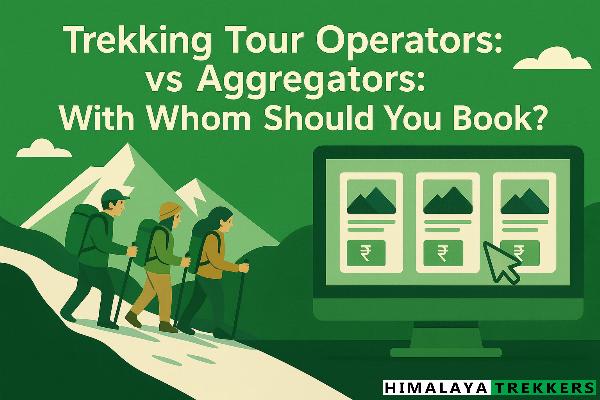
Discounts on a marketplace booking platform may look more tempting than a higher-priced package offered by a tour operator. Yet with trekking, an adventure activity at high altitude, the wrong booking choice can lead to expectations and overall expectations mismatch at the least, if not bring any serious consequences. In this blog, we compare both approaches, highlight the risks of treating treks as e-commerce, and explain why quality-first operators provide real assurance
The Reality
Today trekkers face a clear choice: book directly with a tour operator or rely on a marketplace promising convenience and lower rates. On the surface, platforms appear attractive, offering many options on one page. Yet treks are not products you can simply add to a cart. They demand coordination across planning, safety, permits, logistics, and ground execution. The difference lies in trust, accountability, and quality. An operator stands behind every detail of the experience, while a platform acts only as an intermediary.
Listings vs. Curation: Navigating Options
Aggregators provide large catalogues of treks and operators. This creates choice but little clarity about what suits a given trekker. Operators curate routes based on conditions, readiness, and safety. Their shortlists are tested and refined through years of field knowledge, not simply uploaded.
➡ Internal link: Choosing your right trek
Price Transparency vs Discount or Lowest Price Hype
Platforms often headline attractive rates. Yet hidden taxes, exclusions, or surcharges may appear late in checkout. Operators set transparent fees covering logistics, meals, and safety. While the upfront figure may look higher, it reflects complete delivery and risk management rather than headline bargains.
Quality vs Quantity
Marketplaces focus on volume: more listings, more sellers, more promises. This weakens quality control and blurs responsibility. Operators invest instead in consistency: trained staff, safety kits, refined itineraries, and ethical logistics. A trek is not a commodity; quality matters more than quantity.
Accountability vs. Anonymity
On platforms, calls often pass from sales agents to outsourced providers with no clear responsibility for delivery. Operators remain accountable from first query to last camp. One team manages the entire chain and stands behind decisions if things go wrong.
➡ Internal link: Safety, Risk & Health in Trekking
Simple Trails vs Demanding Routes
For short, popular treks in high season, a platform booking may still work, though quality remains uncertain. But once itineraries become complex—multi-day passes, remote valleys, or treks above 4,500 m—only an operator with vertical knowledge can manage logistics, permits, acclimatisation, and safety contingencies.
Seasons & Weather
Operators plan treks around seasonal logic: snow windows, monsoon risks, and acclimatisation periods. Platforms simply list dates without thorough weather context, often scheduling batches based on gross assumptions.
Disclaimer: Mountain weather changes quickly; treat season windows as guidance and check forecasts in the week you travel.
Quick Comparision Table
| Aspect | Aggregators / Platforms | Tour Operators (HT) |
|---|---|---|
| Variety | High volume, generic listings | Curated, condition-based routes |
| Pricing | Discounts, hidden fees possible | Transparent, inclusive pricing |
| Personalisation | Limited, standard packages | Tailored itineraries and guidance |
| Accountability | Split between agents and providers | One team, full responsibility |
| Quality Control | Variable across providers | Consistent, safety-first standards |
| Season Planning | Fixed dates without context | Field-tested seasonal windows |
Why Operators Deliver Peace of Mind
Aggregators sell treks as commodities. Operators design treks as complete experiences. When terrain turns complex, permits tighten, or weather shifts, the difference between a listing and a committed team is stark. Tour operators like Himalaya Trekkers ensure safety, trust, and value by managing every vertical—from booking to ground support—without compromise.

Comments