

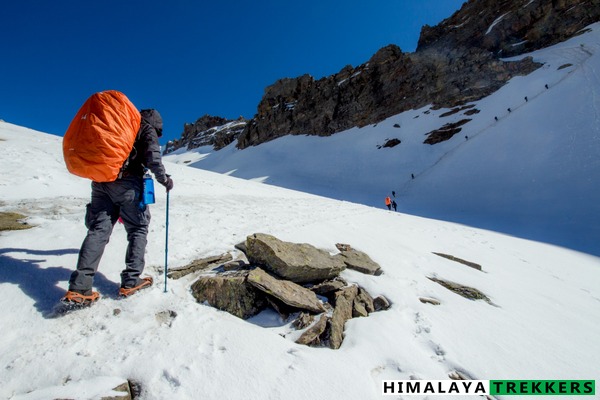
Unsure whether your planning for winter trekking needs microspikes, crampons—or neither? Let the ground decide, not the gear list. Fresh snow looks friendly. By morning it can turn to slick ice where hundreds have walked. You don’t need fancy kit to stay safe on India’s easy winter treks. Good trekking shoes and short, steady steps do most of the work. Microspikes help when the path is truly slick; your operator usually provides them, if truly requiured. Take them off on rock or thin snow. Crampons are mountaineering tools and out of scope here. This guide shows simple, on-trail choices so you stay relaxed—and in control.
Start with shoes and stepping
Wear trekking shoes with a grippy rubber sole and ankle support.
On snow, use short steps and place your foot flat to load the whole sole. On bare ice or mossy/wet rock, do not smear a flat foot—avoid the slab, look for rough patches or edges, and place your foot where it grips.
If you cannot find solid friction in two tests, step back and change line or simply wait for your trek guide or lead.
Why trails feel icy on “easy” treks
Busy trails change fast. Many boots compact the snow. Afternoon warmth softens it. Clear nights refreeze it into a thin, hard glaze on bends and shaded steps. This thin glaze is verglas. Treat it like ice. Slow down and place your feet with care.
Microspikes on Indian winter treks
Microspikes are elastic traction cleats. They slip over trekking shoes in seconds. They add bite on packed snow and low-angle ice. On most beginner routes, operators provide microspikes and gaiters when needed.
Use spikes only when the path is truly slick. Take them off on bare rock or thin snow. Always follow your trek leader’s instruction.
On ice or mossy rock: different rules
- Avoid featureless ice slabs; look for grit, grooves, or rock edges.
- Microspikes off on rock to prevent slipping/dulling; refit on slick snow/ice.
- Short, deliberate steps; test each placement before committing weight.
- Use hands or trekking poles for extra points of contact where safe.
- If the next meters are all smooth ice, this is not a beginner section— simply wait for your guide or choose a gentler line.
How to wear microspikes
Stretch the rubber harness over the toe, then the heel. Keep the chains and points centred under the sole. Check nothing rubs the upper. Sizes are simple and cover most boots. If your shoe size is unusual, confirm a suitable size with your operator. Stow spikes safely when not in use so they do not snag other gear.
Remove spikes on extended rocky stretches to keep footing natural
Gaiters: the quiet partner
Gaiters seal the gap between trouser and boot. They keep snow and meltwater out. Socks stay drier and warmer. Operators often pair microspikes + gaiters on compacted winter trails. The combo is simple and works.
Crampons are not for these treks
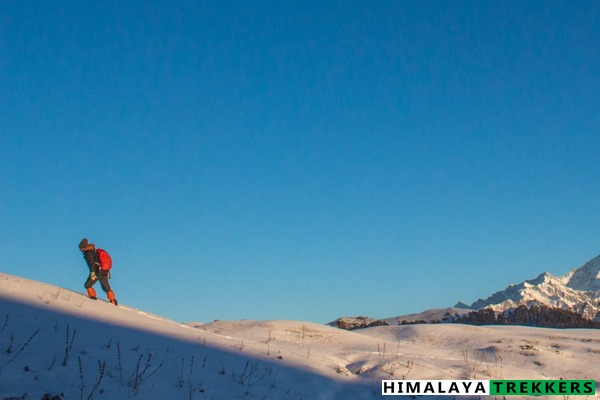
Crampons are technical mountaineering tools. They are for hard snow and steeper, serious terrain. They need crampon-compatible boots and prior training. They are out of scope for India’s beginner-friendly winter treks. Your safe setup is trekking boots + microspikes + gaiters when needed.
A note on Chadar trek
On the Chadar frozen-river trek, teams use gumboots for water and slush. Operators generally advise against microspikes and crampons on the ice. Points can damage the sheet and all-day cramponing is impractical there. Follow the brief. Do not improvise.
Snowshoes: where they appear in India
Snowshoes are not part of normal trekking logistics here. You will mainly see them as resort activities (for example, in Gulmarg). On treks, if snow is loose and deep, choose a broken line, rotate the lead, shorten the plan, or turn back.
Simple ground-led decisions
Flat, icy path in forest? Spikes on.
Mixed or mostly dry ground? Spikes off; shorten steps.
Steep, hard ice with a poor run-out? Not a beginner route today. Step down to easier ground.
Practical safety notes
- Do not wear spikes on roads, floors, or in tents.
- Keep fingers clear when fitting.
- Do not run in spikes; keep the pace easy.
- Remove spikes before long rocky sections; avoid dulling the points.
Quick weather check that actually helps
Scan the IMD Himalayan Mountain Weather Bulletin for your region. Then glance at model guidance for freezing level, wind and fresh-snow signals. Ask three things: Will it refreeze hard overnight? Will new snow hide ice? Will wind load any slope you plan to use? Pack and plan to that answer.
Wrap-up
Keep winter days simple. Wear good trekking shoes. Use short, flat steps. Add microspikes when the path turns truly slick. Pair them with gaiters to keep feet dry. Leave crampons to mountaineering with compatible boots and training. Skip snowshoes on treks. Check the forecast, listen to your guide, and enjoy the snow at an easy, steady pace.

Comments